


Table of Contents
- Prepare Before You Buy: Research and Planning
- Understanding Import Duties and Taxes
- How to Avoid International Currency Fees
- Secure Payment Methods for International Shopping
- Choose the Right Shipping Method
- How to Handle International Returns
- Common International Shopping Mistakes to Avoid
- Conclusion
Last Updated: August 29, 2026
How to Shop Internationally Without Stress
Shopping across borders doesn't have to mean sleepless nights over hidden fees, customs delays, or currency confusion. With the right approach, buying from sellers worldwide is straightforward and convenient.
This guide breaks down the real obstacles, customs duties, foreign transaction fees, payment security, and shipping logistics, into manageable steps. Below, we'll walk you through everything from pre-purchase research to handling returns, so you can confidently buy what you want, wherever it's sold.
Prepare Before You Buy: Research and Planning
The biggest mistake shoppers make is rushing to checkout without verifying three critical details: product availability, seller reliability, and return options. Spending five minutes on research upfront saves hours of frustration later.
Check product availability and shipping destinations
Before adding anything to your cart, confirm the seller actually ships to your location. Many international sellers restrict shipments to specific countries due to customs regulations or shipping carrier limitations. A product marked "in stock" might not be available for delivery to you.
Look for this information on the product page itself. If you can't find it, check the seller's shipping policy or FAQ section. Beyond destination, verify realistic delivery windows. "Free shipping" often means slower transit times, sometimes 3-6 weeks depending on the origin country and your location.
Verify seller reputation and return policies
A low price means nothing if the product arrives damaged or the seller refuses to help. Before purchasing from any international seller, review their feedback ratings, customer reviews, and return policy.
Look for patterns in reviews. If 90% of reviews are positive but 10% mention the same issue, that's a red flag. Pay attention to how sellers respond to negative feedback.
Return policies vary dramatically. Some offer 30-day returns with free return shipping. Others charge you for return postage, which can cost as much as the product itself. Read the policy thoroughly before checkout, it's your safety net if something goes wrong.
Understanding Import Duties and Taxes
Import duties are mandatory fees imposed by your government on imported goods. They're not optional, and they're not always predictable. Understanding how they work prevents sticker shock at delivery.
How duty calculations work
Import duties are calculated based on the declared value of the item, the product category, the country of origin, and your country's trade agreements. The rate can range from 0% to 25% or higher.
Here's the basic math: if you buy an item declared at $50 and the duty rate is 15%, you owe $7.50 in duties. But this gets layered with value-added tax (VAT) or sales tax, which is calculated on the item's value plus the duties. So a $50 item with 15% duty becomes $63.25 total after VAT.
The seller usually doesn't pay these fees, you do, either at checkout or upon delivery. One way to reduce duty exposure is to understand that electronics, textiles, and luxury goods typically face higher rates than household essentials. However, the simpler approach is to factor in an estimated 10-20% additional cost for duties and taxes when budgeting for international purchases.
De minimis thresholds and tax exemptions
Most countries have a de minimis value threshold, a dollar amount below which import duties and taxes are waived. In the United States, this threshold is $800 for most goods (cbp.gov). Items valued under $800 typically enter duty-free.
However, this threshold doesn't apply to all product categories. Textiles, alcohol, and certain other goods have lower thresholds or are excluded entirely. The threshold also resets per shipment. If you order from three different sellers on the same day, each shipment is evaluated separately.
Understanding these thresholds helps you plan larger purchases. Consolidating orders into a single shipment can help keep the total value under the duty-free limit.
How to Avoid International Currency Fees
Currency conversion is where many shoppers lose money unnecessarily. A combination of unfavorable exchange rates and hidden fees can add 3-8% to your final cost.
Understanding foreign transaction fees and exchange rates
When you buy from an international seller using your credit or debit card, two separate charges apply: the exchange rate conversion and the foreign transaction fee.
The exchange rate is set by your card issuer, not by the market. Most banks add a markup on top of the market rate, typically 1-3% (federalreserve.gov). The foreign transaction fee is a separate charge, usually 2-3% of the purchase amount. Some credit cards waive this fee entirely if you're a premium member.
Together, these can add 4-6% to your purchase. On a $200 order, that's $8-12 in invisible charges.
Choosing checkout currency wisely
When you're at checkout on an international site, you often have a choice: pay in the seller's currency or your own currency. This choice matters more than most shoppers realize.
If you choose to pay in your own currency, the seller's payment processor converts the amount and charges a conversion fee, usually 2-4%. If you choose to pay in the seller's currency, your card issuer handles the conversion using their rate and charges their foreign transaction fee. This is typically cheaper, but you don't see the exact final amount until your card statement arrives.
The best strategy depends on your card. If your card waives foreign transaction fees, paying in the seller's currency is usually cheaper. For repeat international shoppers, consider a credit card designed for international travel, which typically offers 0% foreign transaction fees and competitive exchange rates.
Secure Payment Methods for International Shopping
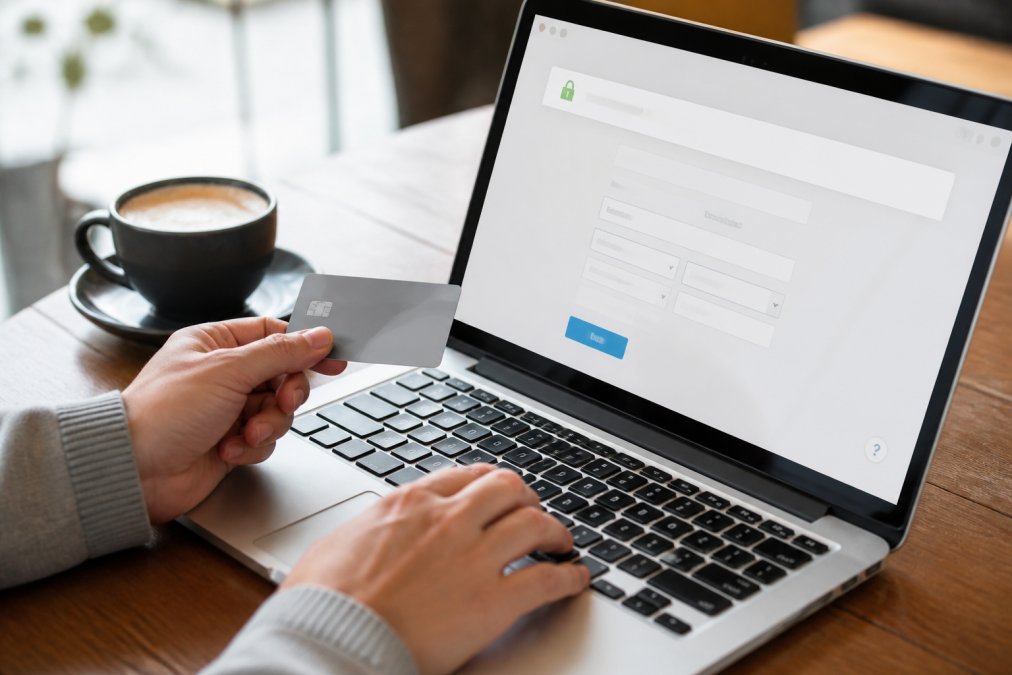
International transactions carry higher fraud risk than domestic purchases, so payment security is non-negotiable.
Credit cards with fraud protection
Credit cards are the safest way to shop internationally. They offer fraud protection by law, if unauthorized charges appear on your statement, you can dispute them and the card issuer investigates. Your liability is typically capped at $50, and most major issuers waive this entirely (the FTC).
Debit cards lack this protection. If someone fraudulently uses your debit card, the money is gone immediately, and recovering it takes weeks or months. For international purchases, debit cards are riskier.
When using a credit card internationally, enable purchase notifications so you're alerted to charges in real time. Also, review your card's foreign transaction fees and exchange rate policies before shopping.
Virtual payment addresses and checkout security
A virtual payment address is a temporary card number generated by your card issuer or a third-party service. Instead of entering your real card number on the seller's website, you enter the virtual number. If the seller's system is compromised, the thief can't use it.
Many banks and credit card companies offer this feature for free. Using a virtual number adds a layer of security, especially when buying from sellers you don't know well.
At checkout, always verify the website's security. Look for "https://" (not just "http://") in the address bar and a padlock icon. These indicate the site uses encryption. If a site lacks these indicators, don't enter your payment information.
Choose the Right Shipping Method
Shipping speed, cost, and reliability vary dramatically depending on the carrier and service level you choose.
Standard vs. express shipping trade-offs
Standard international shipping typically takes 2-6 weeks and is the cheapest option. It works fine for non-urgent items but offers minimal tracking information.
Express shipping takes 5-15 business days and includes better tracking, faster delivery, and often insurance against loss or damage. For items you need quickly or high-value purchases, express shipping is worth the cost.
The real cost isn't just the shipping fee, it's also the risk. A damaged or lost item on standard shipping costs you the full item value plus the hassle of filing a claim. Consider also the carrier. DHL, FedEx, and UPS offer international express service with real-time tracking and insurance. Postal services are cheaper but slower and offer less visibility.
Tracking and insurance options
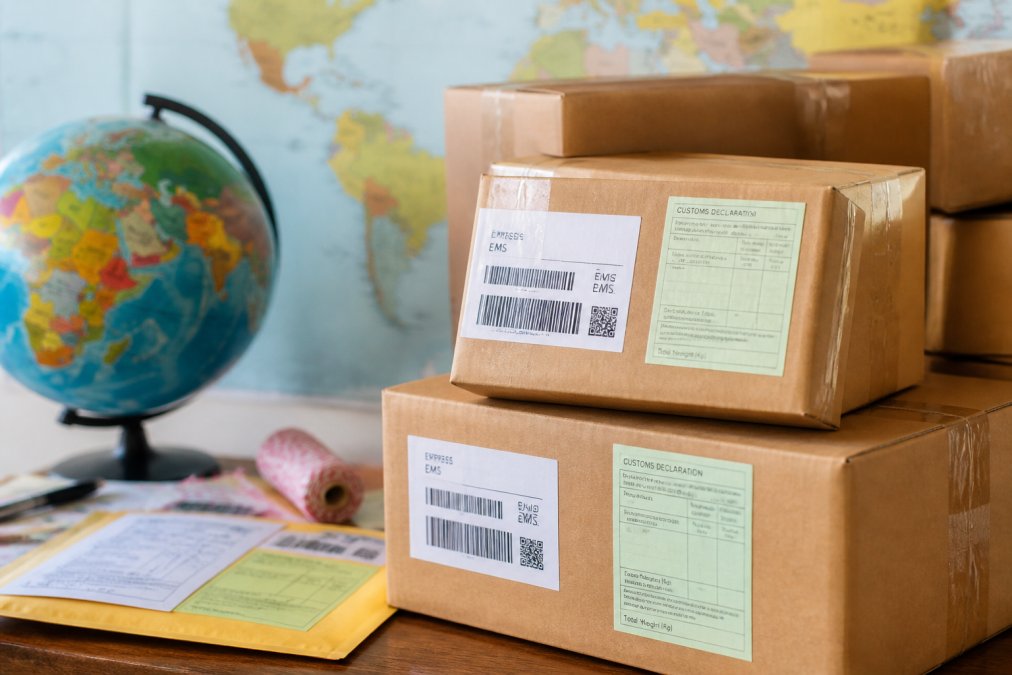
A tracking number is essential for international shipments. It lets you monitor your package's location in real time and proves delivery if a dispute arises. Always request a tracking number at checkout.
Package insurance covers loss or damage during transit. Standard shipping often doesn't include it, so if your package is lost, you're out of luck. Express shipping usually includes basic coverage, but the limits are often low. For high-value items, purchase additional insurance.
Calculate whether insurance makes sense: if the item costs $50 and insurance is $3, it's probably worth it. The insurance cost should be no more than 5-10% of the item's value to be worthwhile.
When a package arrives damaged or goes missing, the tracking number and insurance documentation are your proof of claim. Without them, you have no recourse.
How to Handle International Returns
Returns are more complicated internationally than domestically, but they're still possible.
Understanding seller return policies before checkout
Return policies vary widely across international sellers. Some offer 30-day returns with free return shipping. Others charge you for return postage. A few sellers don't accept returns at all.
Read the policy thoroughly before checkout. Look for these details:
- Return window: How many days do you have to initiate a return?
- Condition requirements: Must the item be unused and in original packaging?
- Return shipping: Who pays for return postage?
- Refund timeline: How long after the seller receives your return do you get your money back?
- Restocking fees: Some sellers deduct a percentage from your refund.
If a seller's return policy is unclear or overly restrictive, that's a red flag.
Return shipping costs and consumer protections
Return shipping is where many international returns become expensive. If you paid $30 for an item and return shipping costs $25, you've effectively lost most of your refund.
Before returning an item, calculate whether the refund is worth the return shipping cost. If you're getting a $10 refund and return shipping costs $15, returning it doesn't make financial sense.
Consumer protections vary by country and payment method. If you paid by credit card and the seller won't accept a return, you can dispute the charge with your card issuer. If you paid by wire transfer, you have almost no recourse.
Common International Shopping Mistakes to Avoid
Learning from common mistakes helps you avoid costly errors.
Overlooking restricted and prohibited items
Many countries restrict or prohibit certain items from being imported. Batteries, liquids, certain electronics, and items made from endangered species often face restrictions. Attempting to import prohibited items can result in the package being seized or returned, and you lose your money.
Before ordering, research whether your item faces import restrictions. Check your country's customs agency website for prohibited and restricted items. If you're unsure, contact the seller and ask whether they've shipped that item to your country before.
Ignoring delivery windows and last-mile logistics
"Delivery window" is the timeframe when your package will arrive, often stated as "3-6 weeks" or "10-15 business days." This is an estimate, not a guarantee. Delays happen due to customs clearance, weather, carrier backlogs, or holidays.
Plan accordingly. If you need something by a specific date, order at least 2-3 weeks earlier than that date for standard shipping. For express shipping, add one week of buffer.
Last-mile delivery is the final leg of shipping, from the carrier's local facility to your door. This is where many packages get delayed, lost, or damaged. Some carriers offer delivery to pickup locations instead of your home, which can be safer if you're concerned about package theft.
Conclusion
Shopping internationally doesn't require navigating a minefield of hidden fees and confusing processes. When you understand how duties, currency fees, and shipping work, and verify seller policies upfront, international shopping becomes a practical way to access products you can't find locally.
Frequently Asked Questions
What are the most common international shopping mistakes to avoid?
The biggest mistakes include not checking prohibited items lists before ordering, ignoring duty calculations and assuming free shipping means no extra costs, overlooking seller return policies, and choosing the wrong payment method. Always verify what can legally be imported, calculate total costs upfront including duties and taxes, and confirm the seller offers international returns before completing checkout. Many shoppers also skip tracking setup, which leaves them unable to monitor their package through customs clearance.
How do I calculate customs duties and import taxes before buying?
Use the Harmonized Tariff Schedule to find your product's code, then multiply the dutiable value by the applicable duty rate (typically 0-25% depending on the item). Import duties apply to the product value plus shipping costs. Many international retailers now show estimated duties at checkout. For items under $800, duties are usually collected upon delivery. Check the seller's country of origin, as trade agreements may lower rates. When in doubt, contact U.S. Customs and Border Protection for clarification on specific product categories.
Why do I see different prices in different currencies at checkout?
The difference comes from foreign transaction fees and currency conversion margins. Your card issuer charges a foreign transaction fee (typically 1-3%), and the merchant may add their own conversion markup. Always choose to pay in USD at checkout to see the exact rate your bank will charge, rather than letting the merchant convert. Compare the USD total against the converted price in the original currency. MixVanta's global currency support shows you final pricing upfront, so you avoid surprise charges at the end.
What should I look for in an international return policy?
Check whether the seller covers return shipping costs, what the return window is, and whether refunds include duties you paid. Some sellers only refund the product price, not customs costs. Confirm the return address is in a country you can afford to ship to. Read reviews mentioning returns to see how long refunds actually take. MixVanta's return process is designed to be straightforward, so verify the specific terms before ordering items from any marketplace.
This article was written using GrandRanker


