


Last Updated: November 5, 2026
Quick Summary
Managing money while traveling starts with a written travel budget split into transportation, accommodation, food, activities, and incidentals, plus a daily spending limit you check each evening. Carry a no-fee card and a backup card, keep cash split across at least three places, and always pay in the local currency to avoid dynamic currency conversion markups.
- Divide your variable budget by trip days, then round down to a clean number for your daily limit.
- Check cash spent plus card charges once each evening and carry any difference forward.
- Ask your issuer about foreign transaction fees and ATM withdrawal charges before you book.
- Split money into a day wallet, a hidden reserve, and a backup kept apart from both.
- Decline terminal or ATM conversion to your home currency and pay in local currency instead.
Table of Contents
- Build a Travel Budget Before You Book Anything
- How to Spend Money Abroad Without Fees
- Cash or Card While Traveling: How to Decide
- Travel Money Safety Tips That Actually Work
- Plan for Emergency Access to Money
- Handle Currency Conversion Without Losing Money
- Pack Smart to Protect Your Travel Budget
- Shop MixVanta for Travel Money Organizers and Gear
- Frequently Asked Questions
Build a Travel Budget Before You Book Anything
Most travelers plan their trip around flight deals and hotel rates, then discover the real cost once they land. Tips for managing money while traveling start before you spend a single dollar.
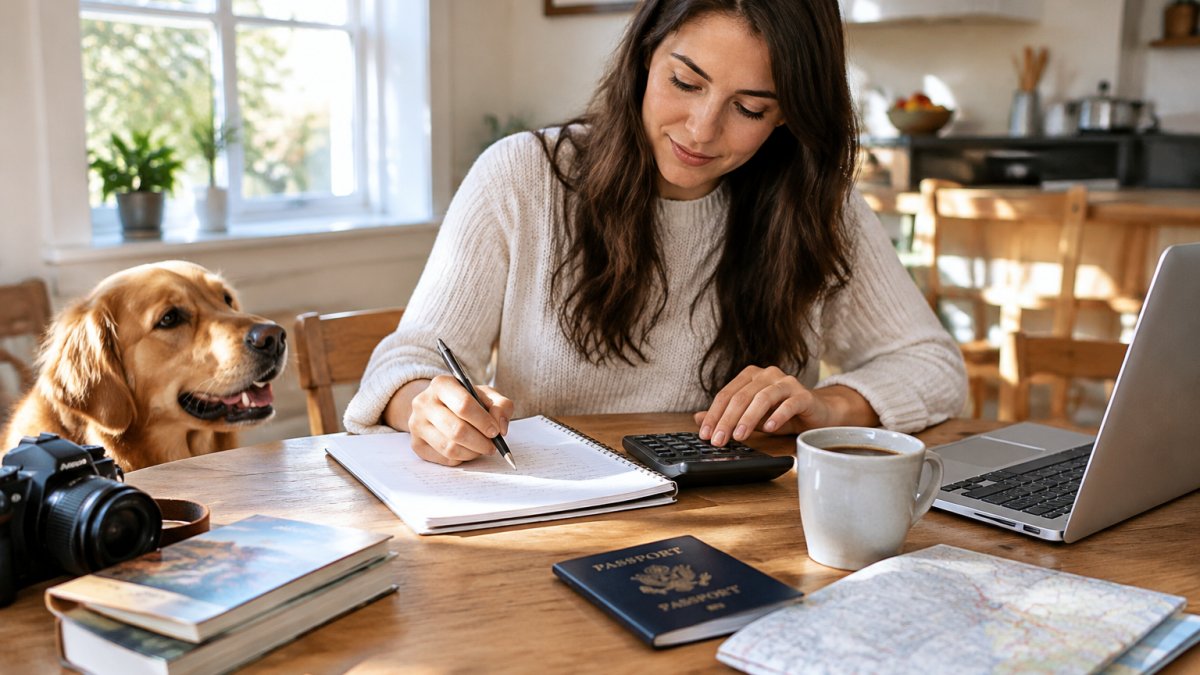
The fix is a written spending plan. Break your trip into four cost buckets: transportation, accommodation, food, and activities. Add a fifth line for incidentals like SIM cards, laundry, and tips.
A travel budget is a written estimate of every cost a trip will generate, divided into fixed costs you book in advance and variable costs you control day to day. Fixed costs include flights, rental car, and accommodation.
Set a Daily Spending Limit You Can Actually Track
A daily spending limit is the amount you allow yourself to spend each day after fixed costs are paid. It works only if the number is one you can track without a spreadsheet at dinner.
Take your total variable budget and divide by trip days. Then round down to a clean number. If the math says $87 a day, set $80.
Track it with a simple rule: cash spent plus card charges, checked once each evening. If you are under today, carry the difference forward. If you are over, subtract it from tomorrow.
Watch out: travelers who set a daily limit but never check it against actual spending usually blow the budget by day four.
Use a Receipt Pouch to Keep Expense Tracking Simple
Paper receipts pile up fast, and a wallet stuffed with crumpled slips tells you nothing at the end of the trip. Give receipts their own home. A dedicated pouch keeps them flat, sorted, and ready to review.
The Rainbow 7-Pocket Letter Size Poly Expanding File works well for this. It has seven pockets for sorting by day or category, fits letter-size documents, and closes with a secure elastic closure. At $29.99, it is an affordable way to keep receipts organized.

A quick evening routine: drop the day's receipts into one pocket, note the total on your phone, and move on. Five minutes now saves an hour of guesswork later.
How to Spend Money Abroad Without Fees
Foreign transaction fees are charges your card issuer adds when you buy something in another currency, and avoiding them starts with the card in your wallet. Many cards add a percentage on top of every purchase abroad, and those charges add up quietly across a two-week trip.
The cleanest way to spend money abroad without fees is to carry a card that charges none.
If your only card carries fees, a no-fee credit card or debit card is worth opening before the trip. Many banks offer accounts built for travel.
Pick the Right Card for Foreign Transactions
Match the card to the job. A no-fee credit card handles purchases, hotels, and rental car holds. A debit card covers cash withdrawal from ATMs. Carrying both means one failure does not strand you.
Check these five things before you travel:
- Foreign transaction fee on purchases
- ATM withdrawal fee and any per-transaction cap
- Whether the card uses the network exchange rate or its own
- Daily spending and withdrawal limits
- Whether the card works with a mobile wallet for tap-to-pay
If you want to stretch your budget further on bookings and gear, our guide to how to use price match guarantees effectively explains how to claim the difference when a price drops.
Cash or Card While Traveling: How to Decide
The answer is both, split by purpose. Use cards for large purchases and cash for small, local transactions. Deciding cash or card while traveling comes down to three factors: vendor type, transaction size, and how much cash you are willing to carry.
Cards win for hotels, rental cars, chain stores, and anything you might need to dispute later. Cash wins at markets, small cafés, taxis, and anywhere a card terminal adds a surcharge or "minimum purchase" rule.
A practical split for most trips: keep a modest amount of foreign cash for the day, and let cards handle everything larger. Never carry your entire cash reserve at once.
| Situation | Best Payment Method | Why |
|---|---|---|
| Hotel or rental car | Credit card | Holds and disputes are easier |
| Street market or small café | Local cash | Avoids minimums and surcharges |
| Large retail purchase | No-fee credit card | Best exchange rate, no fee |
| Taxi or local transit | Small cash | Many drivers prefer it |
| Emergency | Backup card plus cash stash | Redundancy if one fails |
Travel Money Safety Tips That Actually Work
Travel money safety tips work best when they assume something will go wrong. The goal is not to prevent every loss. It is to make any single loss small and recoverable.
Start with separate cash. Split your money into at least three places: a day wallet, a hidden reserve, and a backup kept apart from both. If a pickpocket takes your wallet, you lose a day's cash, not the trip.
Use a money belt or a concealed pouch for the reserve, and never count cash in public.
Keep a Backup Card and a Separate Cash Stash
A backup card is a second card, ideally from a different issuer, kept apart from your main card. If your primary card is declined, frozen, or swallowed by an ATM, the backup keeps you moving.
Rainbow 7-Pocket Letter Size Poly Expanding File →
A separate cash stash is a small reserve of local currency tucked away from your wallet. Enough for a taxi, a meal, and a phone charge. Keep it somewhere you would not reach for casually.
Two more habits that pay off:
- Photograph the front and back of every card and store the images in a password-protected folder, not your camera roll
- Save your issuer's international collect-call number before you leave
If a card is lost or stolen, report it immediately and ask for a card freeze rather than a full cancellation. A freeze can often be reversed if the card turns up.
Plan for Emergency Access to Money
Emergency access means you can reach funds even when your primary method fails. Build it before you go, not after a card stops working.
Three layers cover most situations. First, a second card from a different bank, kept apart from your main card. Second, a cash reserve in local currency kept separate from your wallet, enough for a taxi, a meal, and a phone charge. Third, a trusted contact at home who can send money if needed, with a agreed-upon method (wire, transfer app, or a shared account) tested before you leave.
Know how to reach your bank account from abroad. Confirm your banking app works over foreign networks and that you can log in without a text message to a phone number you no longer have.
If a card is blocked or declined, call the issuer immediately and ask for a card freeze rather than a full cancellation. A freeze can often be reversed if the card turns up, and it stops unauthorized use.
Watch out: travelers who rely on a single phone for banking, maps, and payment can lose all three at once.
Handle Currency Conversion Without Losing Money
Currency conversion costs you money in two places: the rate you get and the fee attached to it. Most travelers only watch the fee, which is why they still lose money on the exchange rate itself.
When a card terminal or ATM offers to convert your purchase into your home currency at checkout, decline it.
At ATMs, withdraw larger amounts less often. Many ATMs charge a flat fee per withdrawal, so one larger withdrawal beats three small ones.
For prepaid travel card options, compare the loaded rate and any reload fee before committing. A prepaid card can help you cap spending, but a poor rate can cost more than the fee you avoided.
Watch out: travelers who always choose the 'convenient' conversion at the terminal or ATM often pay a double markup, once in the rate and once in a fee they never see itemized.
Pack Smart to Protect Your Travel Budget
Baggage fees are the quiet budget killer. Packing light is a money decision as much as a comfort one. One carry-on avoids checked bag charges on both legs of a round trip.
Pack snacks and a refillable bottle. Packed snacks from a local grocery store cut airport food costs and keep kids calm between meals. A travel insurance policy is worth pricing for any trip with prepaid, non-refundable bookings.
Our Kids Travel Tray helps on long drives and flights, with a waterproof surface that wipes clean and a secure fit on most car seats. At $44.99, it keeps snacks, crayons, and small items within reach during the trip.

Two more budget moves before you book: travel off-season for lower accommodation costs, and build your itinerary around free attractions like parks, markets, and walking tours. If you are booking gear online before the trip, our breakdown of whether free shipping is actually worth it shows when a shipping threshold costs more than it saves, and our guide to finding online discount codes helps you cut the price of travel essentials.
Shop MixVanta for Travel Money Organizers and Gear
Managing money well on the road comes down to preparation: a written budget, the right cards, a cash plan, and a place for everything. The gear matters less than the habits, but the right organizer makes the habits easier to keep.
MixVanta carries practical travel and household items with global currency support, free shipping over $70, a 30-day money-back guarantee, and fast handling. Start with the Rainbow 7-Pocket Expanding File for receipts and documents, or the Kids Travel Tray for family trips. Both are small purchases that protect a much larger travel budget.
Get started with MixVanta and build a travel kit that keeps your money organized from booking to return.
Frequently Asked Questions
How can I manage my money while traveling internationally?
Start with a travel budget that breaks down transportation, accommodation, food, and activities. Set a daily spending limit and track expenses with a notebook or app. Notify your bank and card issuer before you leave so your cards work abroad. Carry a backup card and a separate cash reserve, and use a money belt or secure pouch to protect your funds. These habits make managing money while traveling far less stressful.
Should I use cash or a card while traveling?
Use both. Cards work well for hotels, large purchases, and places that accept them, while cash is essential for local markets, small vendors, and tips. Carry a modest amount of local currency and rely on a credit card with no foreign transaction fees for bigger expenses. Having both payment methods means you are never stuck if one fails or a vendor does not accept cards.
How can I avoid overspending on a trip?
Set a daily spending limit before you leave and check your expenses each evening. Use a separate cash stash for discretionary spending so you can see exactly how much is left. Plan free attractions and pack snacks to cut food costs. Track every purchase in a small notebook or app, and keep a cash reserve for emergencies only. A simple daily system prevents small purchases from adding up.
What is the safest way to access money while traveling?
Use ATMs at banks during business hours rather than standalone machines, and cover the keypad when entering your PIN. Carry only the cash you need for the day and leave the rest in a secure hotel safe or money belt. Keep a backup card in a separate bag from your main wallet. Notify your bank of your travel dates so your card is not frozen, and save your card issuer's contact number.


