


Last Updated: November 8, 2026
Quick Summary
Personalized wellness improves long-term health mainly by improving adherence: a plan built around your actual data, history and goals is one you can still follow in year three. It outperforms generic advice when it targets your dosing and response variation, your specific condition, and your real schedule, budget and preferences.
- Fix sleep timing before sleep duration, since a consistent wake time anchors the circadian rhythm.
- Add one habit at a time and let it survive a bad week before adding the next.
- Stacking four habits in one week is the most common failure mode and usually ends in abandonment by week three.
- Personalization depends on honest inputs; bad data about sleep or diet makes a tailored plan optimize the wrong thing.
- Start with one week of honest observation, recording sleep, movement and stress without changing anything.
Table of Contents
- What Personalized Wellness Actually Means for Long-Term Health
- Wearable Technology for Health Monitoring: Turning Daily Data into Better Decisions
- Preventative Wellness Strategies That Change Your Health Trajectory
- Personalized Medicine Benefits: Where Tailored Treatment Outperforms One-Size-Fits-All Care
- The Psychological Barriers That Derail Long-Term Adherence
- Health Equity and Access: Who Gets Left Out of Personalized Care
- Building Your Own Personalized Wellness Routine Starting This Week
- Frequently Asked Questions
What Personalized Wellness Actually Means for Long-Term Health
Personalized wellness is the practice of shaping nutrition, movement, sleep and stress habits around one person's own data, history and goals instead of a generic plan. The impact of personalized wellness on long-term health comes down to one thing: a plan built around your actual life is a plan you can still follow in year three.
That distinction matters more than most people expect. Generic advice is easy to start and easy to abandon. A tailored plan asks more up front, then pays that effort back in consistency.
The products that stick are usually the ones that fit an existing routine, not the ones that demand a new one. Below, we break down where personalization genuinely outperforms the one-size-fits-all approach, and where it quietly fails.
Wearable Technology for Health Monitoring: Turning Daily Data into Better Decisions
A wearable is only useful if the data changes a decision. Step counts, resting heart rate and sleep duration are the raw inputs; the value comes from what you do differently on a Tuesday when the numbers look off.
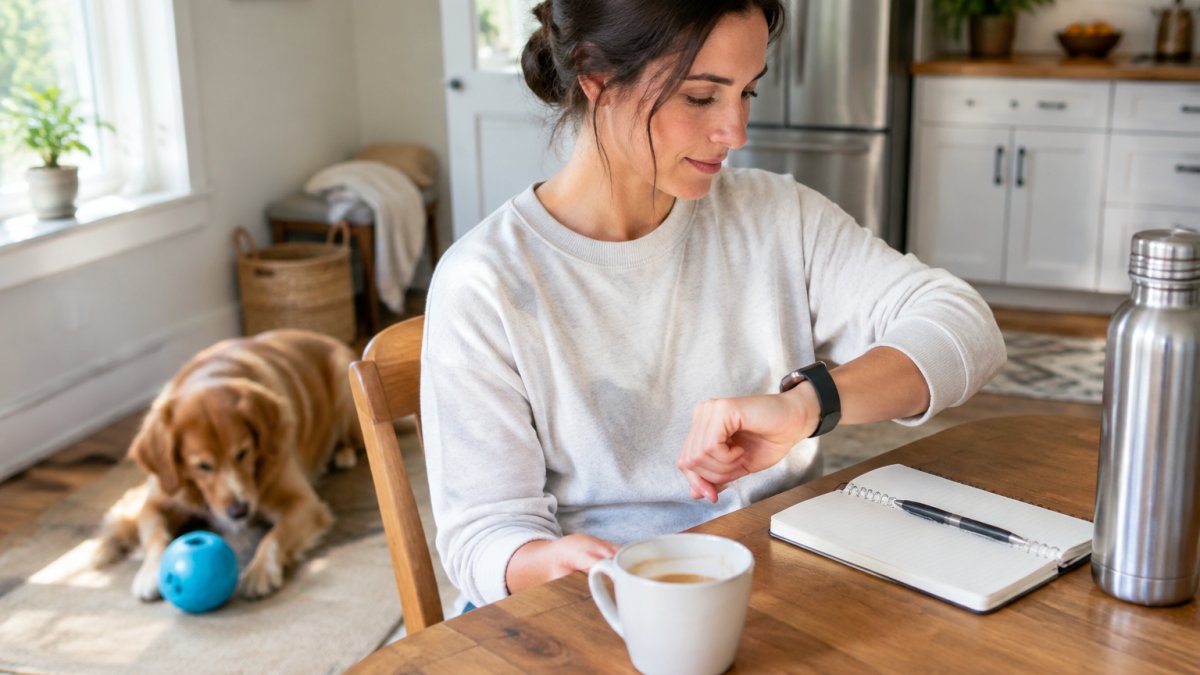
The trap is collecting data without a rule attached. A common mistake is wearing a tracker for months and never setting a single threshold that triggers action. Pick two metrics, define what "off" looks like, and decide your response in advance.
For the device itself, a bottle that tracks what you actually drink removes one more manual step. The Smart Digital Thermal Bottle shows drink temperature on a digital display and is designed for everyday use on the go. If you are weighing whether budget trackers are worth it at all, our breakdown of affordable wearables for health tracking covers what the cheaper devices actually measure well.

Preventative Wellness Strategies That Change Your Health Trajectory
Preventative wellness strategies work best when they are boring, repeatable and small enough to survive a bad week. The strategies that shift a long-term health trajectory are rarely dramatic: consistent sleep timing, regular movement, a diet you can sustain, and stress management you actually practice. What separates a strategy that changes outcomes from one that fades is whether it targets a mechanism, fits a real schedule, and has a defined trigger.
Here is the sequence we would recommend, with the reasoning behind each step.
-
Fix sleep timing before sleep duration. A consistent wake time anchors the circadian rhythm, which in turn influences appetite, mood and glucose handling. Stabilizing the wake time first can make duration easier to hit.
-
Add movement you can do at home on a low-energy day. The point is not intensity but repeatability. A ten-minute walk or a short bodyweight circuit that survives a bad day beats an ambitious gym plan that collapses the first week of a busy month. The Multi-functional Supine Board is designed as a compact, space-saving home exercise trainer.

Multi-functional Supine Board Round Fitness Home Exercise -
Build one nutrition habit you can repeat without planning. Pick a single default meal or snack that requires no decision, such as a fixed breakfast or a pre-portioned afternoon snack.
-
Add a stress practice with a fixed trigger. A stress habit without a cue is the first thing to disappear. Anchor it to something you already do every day, such as after brushing your teeth or before your first meeting.
A stress-support habit needs a fixed, easy anchor. Calm Boost Ashwagandha Gummies ($25.99 for 60 gummies) are infused with ashwagandha and fortified with vitamins C, D and A.
Watch out: stacking too many changes at once is the most common failure mode. Adding four habits in one week feels productive and almost always ends in abandonment by week three. Add one, let it survive a bad week, then add the next.
For a wider look at what is trending in this space, see our roundup of trending health products.
Personalized Medicine Benefits: Where Tailored Treatment Outperforms One-Size-Fits-All Care
Personalized plans can account for individual differences that a generic recommendation may miss.
Three mechanisms explain most of the long-term advantage.
Dosing and response variation. Two people can take the same intervention and get different results because of age, body composition, kidney and liver function, and genetic variation in how drugs are metabolized. A movement plan calibrated to a person with joint pain looks nothing like one built for a healthy 25-year-old, and the version that fits is the version that gets done.
Condition-specific targeting.
Adherence as a clinical outcome. A plan a person actually follows for years beats a theoretically optimal plan abandoned in six weeks. This is where personalization earns its keep: it fits the schedule, budget and preferences of the individual, so the intervention survives contact with real life.
The drawbacks are real and worth stating plainly. Personalization costs more attention up front, and it depends on honest inputs. Feed a tailored plan bad data about your sleep or your diet, and it will confidently optimize the wrong thing. It also requires access to someone who can interpret the data, which is why the access section below matters as much as the clinical case.
Personalization is not a substitute for professional care. Use consumer data to inform habits, and consult a clinician to interpret anything that looks like a medical signal.
For readers building the habit side of a tailored plan, our roundup of trending health products covers the tools that fit an existing routine rather than demanding a new one.
The Psychological Barriers That Derail Long-Term Adherence
Adherence fails for psychological reasons far more often than for lack of information. Three barriers account for most of it:
- All-or-nothing thinking. One missed workout becomes a missed month.
- Identity mismatch. The plan describes a person you are not, so following it feels like acting.
- Invisible progress. Without a visible marker, effort feels pointless by week six.
The fix for the third barrier is measurement you can see. The Electronic Counting Hand Grip Strength Trainer ($48.99) has a built-in electronic counter that records each repetition, so progress is shown as a number on its display. The fix for the first two is smaller: shrink the plan until a bad day cannot break it.
Health Equity and Access: Who Gets Left Out of Personalized Care
Personalized care has an access problem that the industry discusses far less than it should. Tailored programs often assume time, money, stable housing and a baseline of health literacy, and anyone missing one of those gets excluded from the very approach marketed as more inclusive.
The practical workaround is to personalize around constraints rather than around ideals. A plan built for a shared apartment, a shift schedule and a tight budget is still personalized; it is simply personalized to reality. Health literacy matters here too. If a plan needs a glossary to follow, it is the wrong plan.
The Multi-functional Supine Board ($269.99) has a compact, space-saving design suited to apartments and small home workout areas, and it suits a range of fitness levels. It is not a substitute for professional care.
Building Your Own Personalized Wellness Routine Starting This Week
Start with one week of honest observation, then build. Write down your actual sleep, movement and stress patterns for seven days without changing anything. That baseline is the foundation everything else rests on.
Then apply this framework:
| Week | Focus | What You Do | What You Track |
|---|---|---|---|
| 1 | Baseline | Record current habits, change nothing | Sleep timing, movement, stress |
| 2 | One habit | Add a single repeatable action | Streak length, not intensity |
| 3 | Anchor | Attach the habit to an existing cue | Whether it survived a bad day |
| 4 | Review | Keep what held, drop what did not | What you would repeat |
If you are ready to stock the routine rather than plan it, browse our health products or add a wellness foot massage therapy session to your recovery days.

The hard part is not knowing what a personalized routine should contain. It is building one that survives contact with a real week. MixVanta carries the everyday pieces that make a routine easier to keep, from a temperature-displaying thermal bottle to a grip trainer that counts every rep, with a diverse catalog, competitive deals and free shipping options. Get started with MixVanta and build a routine you can still follow next month.
Frequently Asked Questions
What is the difference between personalized wellness and traditional healthcare?
Traditional healthcare usually reacts to symptoms after they appear, using standard protocols built for the average patient. Personalized wellness starts earlier and builds a plan around your own data: sleep patterns, activity, biometric screening results, family history, and lifestyle habits. The goal shifts from treating disease to protecting your long-term health trajectory. In practice, that means your preventive care plan looks different from your neighbor's, even if you share the same age and risk factors.
How does data-driven wellness improve long-term health outcomes?
Data-driven health works by replacing guesswork with feedback. Wearable technology for health monitoring tracks sleep, heart rate, and movement daily, so you can see whether a change actually helped. A lifestyle assessment at the start gives a baseline, and repeat biometric screening shows whether your numbers moved. Because you adjust based on real signals rather than generic advice, small corrections happen sooner, before they become chronic conditions. The long-term effect is a steadier trajectory and fewer surprises at annual visits.
Can personalized wellness programs help prevent chronic disease?
They can reduce risk, though no program guarantees prevention. Chronic disease management starts with the factors you can influence: blood pressure, blood sugar, weight, sleep quality, stress, and physical activity. A personalized care plan targets the factors most out of range for you. Preventive medicine research consistently links early lifestyle behavior modification to lower rates of heart disease and type 2 diabetes. The key is consistency, so pick changes you can sustain for years, not weeks.
How do you start building a personalized wellness routine?
Start with a baseline, not a shopping list. Track sleep and activity for two weeks using a phone or wearable, write down what you eat on a typical weekday, and get basic biometric screening numbers from your doctor. Pick one priority from that data, such as a consistent bedtime or a daily walk, and hold it for a month before adding another. Add tools only where they support the habit, like a smart bottle that keeps water cold so hydration is easier to maintain.


