


Last Updated: November 9, 2026
Quick Summary
Offering free shipping is sustainable for startups only when the shipping cost is already priced into the order rather than absorbed after the sale. Calculate contribution margin per order by subtracting product cost, packaging, labor, carrier rate, payment processing and a returns allowance, then subtract the waived shipping fee again. If that number stays positive, free shipping pays for itself.
- Ecommerce shipping costs go beyond the label price to include packaging, dimensional weight surcharges, residential fees and pick-and-pack labor.
- Set your free shipping threshold at or slightly above your break-even order value, never below it.
- Tiered thresholds split the promise into bands so each cart pays its own way instead of subsidizing small orders.
- Returns quietly erode free shipping because a returned order costs the outbound label, the return label and restocking labor.
- Free shipping works when product margin is healthy, average order value exceeds the threshold and fulfillment is cheap enough to absorb the cost.
Table of Contents
- Why Free Shipping Feels Mandatory for New Stores
- The Hidden Ecommerce Shipping Costs for Startups Nobody Budgets For
- How to Calculate Shipping Profitability Before You Promise Anything
- Building a Shipping Threshold Strategy That Protects Your Margin
- Tiered Shipping: The Middle Path Between Free and Paid
- Returns, Remote Zones, and Other Costs That Quietly Erode Free Shipping
- When Free Shipping Actually Works for a Startup
- Test Your Shipping Offer Against Your Real Numbers
- Frequently Asked Questions
Why Free Shipping Feels Mandatory for New Stores
Offering free shipping can be sustainable for startups when the shipping cost is already priced into the order, not absorbed after the sale. Most new stores treat free shipping as a marketing switch they flip on launch day, then discover it is a permanent line item on every invoice.
The pressure is real. Marketplaces often advertise free delivery, so first-time buyers may arrive expecting it.
The Hidden Ecommerce Shipping Costs for Startups Nobody Budgets For
Ecommerce shipping costs for startups go far beyond the label price. The quote you see covers transport. The bill you pay covers packaging, dimensional weight surcharges, residential delivery fees, and the labor to pack and label each box.
Where the Money Actually Goes
A common mistake is budgeting from the carrier rate alone. In practice, a parcel costs more than the label:
- Boxes, mailers, tape, and void fill
- Pick-and-pack labor, including the minutes per order
- Dimensional weight, which bills by volume when a box is mostly air
- Residential and delivery-area surcharges
- Payment processing on the full order total
- Returns and reshipments for damaged items
How to Calculate Shipping Profitability Before You Promise Anything
To calculate shipping profitability, subtract every fulfillment cost from your gross margin per order and check whether the remainder still covers acquisition and overhead. If it does not, free shipping is being funded by something else. The fastest way to get a real answer is to build the calculation order by order, not from an average.
The Contribution-Margin Formula
Start with a single line item and work down:
- Selling price
- Minus product cost (landed cost, including inbound freight and duties)
- Minus packaging and packing labor
- Minus the carrier rate for the destination zone, including dimensional weight and surcharges
- Minus payment processing on the full order total
- Minus an allocated returns allowance
- Equals contribution margin before marketing
If that number is positive, the order pays for itself and contributes to acquisition and overhead. If it is negative, free shipping is being subsidized by other orders, by future revenue, or by the owner's cash. None of those are sustainable for long.
A Worked Break-Even Walkthrough
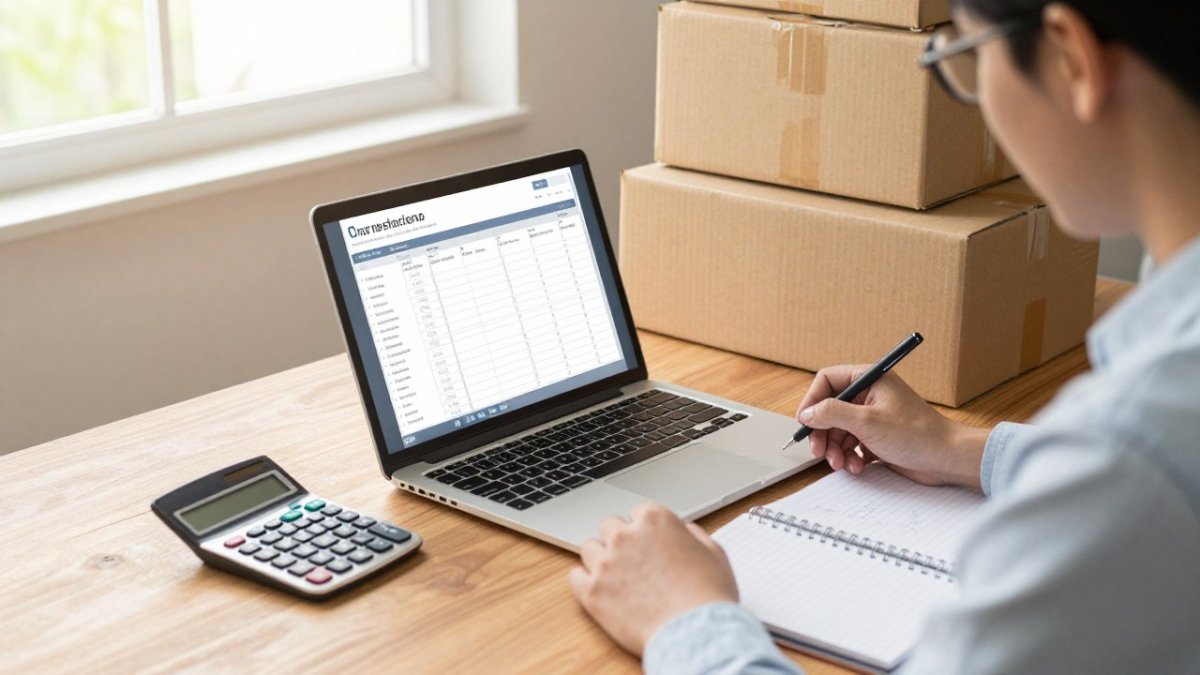
Take one product and run the numbers in a spreadsheet row. Note the selling price, the landed product cost, and the packaging cost. Add the average pick-and-pack minutes multiplied by your loaded labor rate. Add the carrier rate for a typical destination zone, then add a small buffer for dimensional weight and residential surcharges. Subtract the total from the selling price. What remains is contribution margin before marketing.
Now apply the free shipping promise. If the customer would otherwise have paid a shipping fee, that fee is now a cost you absorb, so subtract it again. The order that looked profitable at full price can flip negative once delivery is free. The break-even order value is the cart total at which contribution margin after free shipping still covers your target acquisition cost and a slice of overhead.
Build a Break-Even Calculator You Can Reuse
A simple unit-economics calculator does not need software. Set up columns for selling price, product cost, packaging, labor, carrier rate by zone, payment processing, and returns allowance, then a final column for contribution margin. Add a second block that subtracts the shipping fee you are waiving. Sort orders by cart value and look for the point where margin turns positive. That point is your minimum viable threshold.
Watch out: averaging carrier rates across all zones hides the orders that lose money, so calculate by zone and by cart value before you set a single threshold. For the fuller math on whether the promise pays for itself, see Is Free Shipping Actually Worth It? The Real Math.
Building a Shipping Threshold Strategy That Protects Your Margin
A shipping threshold strategy sets a minimum order value at which free shipping applies, so small orders pay their own way. The threshold should sit above your average order value, not below it, and it should be tested against real carts rather than set by feel.
Set the Threshold From Your Break-Even Number
Your break-even order value from the profitability calculation is the floor. The threshold should sit at or slightly above it, because anything lower means the smallest qualifying carts still lose money on delivery. A common pattern is to place the threshold just above the average order value so the upgrade feels reachable, then confirm with a margin check that the qualifying carts are genuinely profitable.
Tiered Thresholds Beat a Single Number
A single threshold is all-or-nothing. Tiered thresholds split the promise into bands so each cart pays its own way:
- Below the first threshold: customer pays a flat rate
- Between the first and second threshold: reduced shipping rate
- Above the second threshold: free standard shipping
- Above a higher band: free expedited shipping
This structure turns shipping into a growth lever rather than a subsidy. Price-sensitive buyers still have a paid option, mid-size carts get a nudge to add one more item, and large carts are rewarded with speed. The bands should be set from the same contribution-margin math, not copied from a competitor.
Test the Threshold Before You Publish It
Pull the last month of orders and re-run each one under the proposed threshold. Calculate contribution margin per order under the new rule and compare it to the current rule. If the average holds and the share of unprofitable orders falls, the threshold is workable. If margin drops below break-even, move the number up.
Watch out: a threshold set too high loses first-time buyers at checkout, and a threshold set too low is a blanket subsidy with extra steps, so test both the cart-abandonment rate and the margin before committing. Change one variable at a time and measure the effect on both conversion and contribution margin.
Tiered Shipping: The Middle Path Between Free and Paid
Tiered shipping splits delivery into levels: standard, expedited, and free above a spend minimum. It gives price-sensitive buyers a paid option and rewards larger carts with free delivery.
| Strategy | Best for | Main risk |
|---|---|---|
| Free shipping on all orders | High-margin catalogs, subscription model | Margin erosion on small carts |
| Spend threshold | Most startups | Threshold set too low or too high |
| Tiered by speed | Mixed carts and urgent buyers | Confusing checkout copy |
| Flat rate per order | Predictable budgeting | Overcharging light orders |
Returns, Remote Zones, and Other Costs That Quietly Erode Free Shipping
Returns are the cost most free shipping models ignore. A returned order often costs the outbound label, the return label, and the labor to inspect and restock, and none of that is recovered.
Remote zones compound it. Carriers price delivery by zone, so a free shipping promise that ignores geography means distant customers cost more than nearby ones while paying the same. If you advertise free shipping without a zone plan, a handful of distant orders can erode margin. Tracking returns without losing money on each one is its own discipline, covered in How to Track Marketplace Return Shipments Fast.
When Free Shipping Actually Works for a Startup
Free shipping works when three conditions hold: healthy product margin, an average order value above the threshold, and a fulfillment process cheap enough to absorb the cost. Subscription models and repeat buyers help, because customer loyalty spreads the shipping cost across more orders.
It also works as a competitive advantage when competitors charge for delivery and your margin can carry the difference. For a broader look at whether the model fits your business, read Is Free Shipping Always Worth It for Your Business?. And if you want to see how free delivery scales across borders, How to Get Free Shipping Globally: 2026 Guide covers the options.
Test Your Shipping Offer Against Your Real Numbers
Test the offer on real orders before you commit to it publicly. Pull the last month of orders, apply the proposed threshold, and calculate contribution margin per order under the new rule. If the average holds, the offer is sustainable. If it drops below your break-even, the threshold needs to move.
Shipping delays also carry a cost, since slow delivery drives support tickets and cancellations. Understanding why parcels take longer than expected helps you set honest delivery windows, as explained in Why Online Shipping Takes So Long: A 2026 Guide.
Free shipping can work, but only when the numbers behind it are planned rather than promised. MixVanta runs free shipping over $70 with a 30-day money-back guarantee and fast handling, so the offer is defined rather than open-ended. Get started with MixVanta and build a shipping offer your margins can actually support.
Frequently Asked Questions
How can startups offer free shipping without eroding profit margins?
Set a minimum order value that covers your average fulfillment cost, and model it before launch. Take your average order value, subtract product cost and shipping expense, and confirm each free-shipping order still leaves a positive contribution margin. Many stores land on a threshold that lifts average order value enough to absorb the shipping cost. Review the numbers monthly, because carrier rate changes and return rates shift the break-even point.
What is a shipping threshold and how do you calculate it?
A shipping threshold is the minimum order value at which you cover shipping. To calculate it, divide your average shipping cost per order by your gross margin percentage. If shipping averages a set amount and your margin is 40%, the threshold needs to be high enough that 40% of the order value exceeds that shipping cost. Round up slightly to leave room for returns and packaging, then test the number against real order data.
Does free shipping actually increase conversion rates for new businesses?
It often does, because unexpected shipping charges are a common reason shoppers abandon checkout. The gain only pays off if the added conversions produce enough contribution margin to cover the shipping you absorb. Track conversion rate and profit per order together after launching a free-shipping offer. If conversion rises but profit per order falls, a threshold or tiered approach usually restores the balance.
Is it better to offer free shipping or lower product prices?
It depends on your price elasticity and your customers. Free shipping tends to appeal to first-time buyers who dislike checkout surprises, while lower prices help on comparison pages where shoppers sort by cost. Run a short test: offer free shipping to one segment and a matching price cut to another, then compare conversion rate, average order value, and profit per order. Keep whichever produces healthier unit economics over a full month.


