


Table of Contents
- Why Online Shipping Takes So Long: The Supply Chain Reality
- Average Online Shipping Duration and What to Expect
- Factors Affecting Shipping Speed Across the Supply Chain
- What Is Last Mile Delivery and Why It Matters Most
- Tracking System Lags: Why Your Package Status Doesn't Update
- How to Track Your Shipment and Spot Real Delays
- What to Do If Your Order Is Delayed
- Conclusion
Last Updated: August 30, 2026
Why Online Shipping Takes So Long: The Supply Chain Reality
When you click "buy now," your shipment navigates a complex web of warehouses, sorting facilities, customs checkpoints, carrier handoffs, and last-mile delivery networks. Understanding why online shipping takes so long requires looking at the actual mechanics of modern logistics.
At MixVanta, we work with customers worldwide who expect fast delivery, and we've learned that shipping delays rarely stem from a single bottleneck. Instead, they're the result of dozens of sequential processes, each adding time to your order. Some delays are inevitable parts of the supply chain. Others are avoidable if you know what to watch for.
This guide breaks down every major factor that affects shipping speed, from order placement to delivery. You'll learn what typical timelines look like, where real delays happen, and what you can actually do about them.
Average Online Shipping Duration and What to Expect
Domestic shipping within the United States typically takes 5-14 business days from order placement to delivery. International shipping takes 15-45 days depending on the destination country and customs processing times.
The timeline breaks down roughly like this:
- Order processing: 1-3 business days
- Fulfillment and packing: 1-2 business days
- Transit time: 2-10 business days (domestic) or 7-30 days (international)
- Last-mile delivery: 1-3 business days
- Customs clearance (international only): 2-14 days
Free shipping typically adds 3-7 extra days compared to expedited shipping because carriers batch free-shipping packages on a less-prioritized schedule. Carriers consolidate lower-priority shipments to maximize efficiency and reduce costs, which they pass along as savings to you.
Peak seasons like Black Friday, Cyber Monday, and the holiday rush can double these timelines. During high-volume periods, fulfillment centers process 10-20 times their normal daily volume, and carrier networks become saturated. A package that normally ships in 2 days might take 5-7 days during peak season simply because the warehouse is processing thousands of orders ahead of yours.
Factors Affecting Shipping Speed Across the Supply Chain
Online shipping speed depends on decisions made at multiple stages of the supply chain.
Order Processing and Fulfillment Center Operations
The first delay happens before your package even ships. Order processing typically takes 1-3 business days, but this varies based on several factors.
When you place an order, it enters a queue at the fulfillment center. The warehouse team must verify payment, confirm inventory, pick the item from shelves, pack it, apply a shipping label, and hand it to a carrier. Large retailers with dedicated logistics infrastructure process orders faster than smaller sellers using third-party fulfillment services. Automated facilities can process 1,000+ orders per hour, while manual operations might process 200-300.
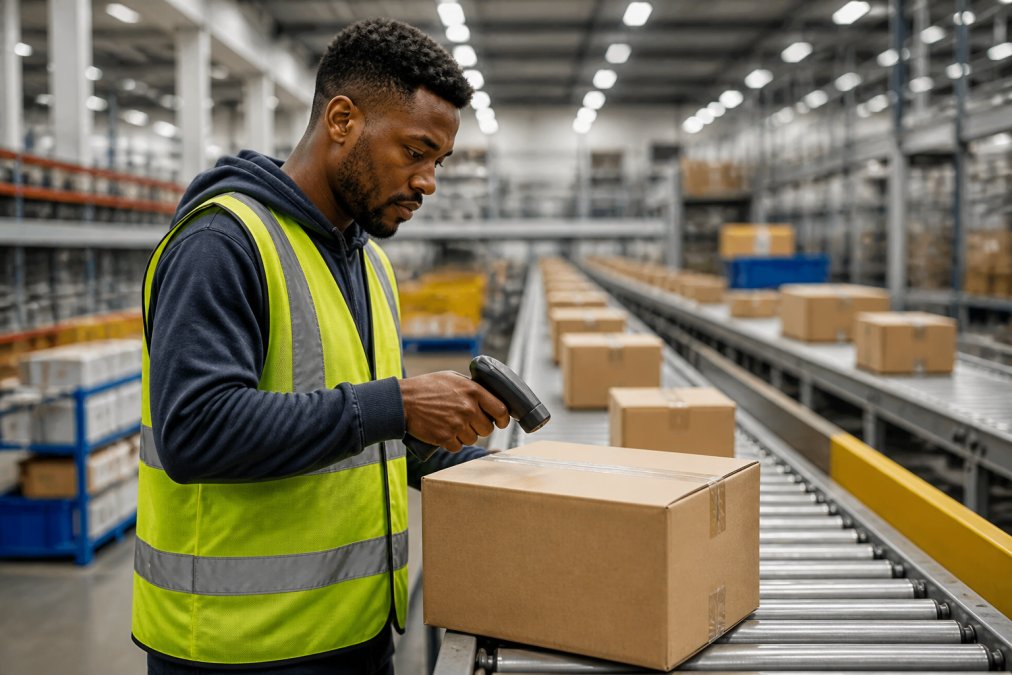
Inventory management also affects speed. If an item is in stock at the nearest warehouse to your location, it ships faster. If it's only available at a distant facility, the order might be rerouted, adding 1-3 days. Order complexity matters too, a single-item order packs and ships faster than a multi-item order where items come from different warehouse locations.
Customs Clearance for International Orders
International shipping introduces a major variable that domestic orders never face: customs clearance. When a package crosses a border, a customs agent must verify the contents, confirm the declared value, check for restricted items, and calculate any applicable duties or taxes. This process alone can take 2-14 days depending on the country.
Some countries have faster customs processing than others. Canada and Mexico typically clear shipments within 2-5 days. European Union countries average 3-7 days. Countries with less developed customs infrastructure can take 10-14 days or longer.
Documentation errors cause additional delays. If your shipment's customs form is incomplete or contains mismatched information, customs agents will hold the package for clarification, adding 3-7 days. Electronics, batteries, liquids, and items with restricted materials require extra inspection, extending customs clearance by several days.
Carrier Handoffs and Transit Routes
Once a package leaves the fulfillment center, it enters the carrier's network through a series of sorting facilities and transit hubs. A typical package might be handled by 5-10 different facilities before reaching your door. Each handoff takes time, the package arrives, gets scanned, sorted with thousands of others, loaded onto a truck or plane, and transported to the next facility.
Geographic distance and routing efficiency affect speed significantly. A package traveling 500 miles might take 3-4 days. The same distance in a congested urban area with multiple sorting facilities might take 5-6 days because the package must be routed through more intermediate hubs. Rural deliveries take longer because fewer facilities serve those areas.
Carrier capacity during peak periods creates bottlenecks. During the holiday season, sorting facilities work 24/7 shifts but still have physical limits. A package that would normally move through a facility in 8 hours might sit for 24-36 hours during peak season.
Peak Season and High-Volume Shipping Delays
High-volume periods create system-wide delays that compound at every stage. Black Friday, Cyber Monday, and the holiday season generate 2-3 times normal order volume, straining fulfillment centers, carrier networks, and last-mile delivery services simultaneously.
During peak season, fulfillment centers hire temporary staff and extend operating hours. Despite these efforts, processing times increase, a normal 1-day processing time becomes 3-5 days. Carriers add extra flights and trucks, but they still fall behind. Delivery windows slip by 3-7 days for standard shipping.
Orders placed before November 15 usually ship before the holiday rush hits. Orders placed between November 15 and December 15 experience maximum delays. Orders placed after December 15 sometimes ship faster because the peak volume has already passed through the system.
What Is Last Mile Delivery and Why It Matters Most
Last-mile delivery is the final leg of the shipping journey, when a package leaves a local delivery facility and arrives at your door. It typically takes 1-3 business days but creates more customer frustration than any other part of the supply chain because delays become personal, you're waiting for your package to arrive, and you can see it's in your city.

Last-mile delays happen because delivery routes are optimized for efficiency, not speed. A delivery driver might have 150-300 packages to deliver in a single day. The route is calculated to minimize distance and time, which sometimes means your package sits on a truck for several hours before the driver reaches your street. Weather delays the process further, a snowstorm or heavy rain can add 1-2 days.
Delivery density affects speed significantly. Urban areas with high package volume per square mile deliver faster than suburban or rural areas. A delivery driver in a dense city might deliver 200 packages in 8 hours, while the same driver in a rural area might deliver 50 packages in the same time because packages are spread across a larger geographic area.
Address accuracy matters too. If your address is incomplete or difficult to locate, the driver might fail to find the correct location and return the package to the facility, adding 1-2 days to your delivery time.
Tracking System Lags: Why Your Package Status Doesn't Update
One of the most frustrating aspects of online shipping is the gap between where your package actually is and where the tracking system says it is. Tracking status updates often lag 4-12 hours behind the package's actual location because tracking data is collected at sorting facilities and delivery checkpoints, then uploaded to the carrier's system.
Different carriers update tracking at different frequencies. Some update every 4-6 hours. Others update once per day. USPS tracking sometimes shows no updates for 24-48 hours, even though the package is moving through their network.
Tracking gaps also occur during carrier handoffs. When a package transfers from one carrier to another, there's often a 6-24 hour period where no tracking updates appear. International packages experience even longer tracking delays due to customs scans, international carrier transfers, and different tracking systems in different countries.
How to Track Your Shipment and Spot Real Delays
Most carriers provide tracking numbers via email within 24 hours of shipment. Check your tracking information daily, but understand that normal packages show 3-5 tracking updates during domestic shipping: one when the carrier picks up the package, one or two as it moves through sorting facilities, and one or two as it approaches your area.
Watch for these specific tracking patterns that indicate real delays:
Status stuck at origin facility for 3+ days. This usually indicates a processing problem. Contact the seller or carrier to investigate.
Package arrived at local delivery facility but hasn't shipped for 24+ hours. This might indicate a delivery exception or routing issue.
No tracking updates for 48+ hours during transit. For domestic shipping, this is unusual and worth investigating. For international shipping, this is often normal during customs clearance.
Tracking shows delivery attempted but you received no notice. This indicates a delivery exception. Contact the carrier to arrange redelivery.
Tracking shows package delivered but you never received it. Contact the seller immediately to file a claim.
What to Do If Your Order Is Delayed
If your package is genuinely delayed, stuck at a facility, or past its estimated delivery date, contact the carrier directly using your tracking number. If the carrier can't locate the package, contact the seller. Most reputable sellers take responsibility for delayed orders and can file a claim with the carrier, investigate the issue, or offer a replacement or refund.
Document everything. Take screenshots of your tracking information, save emails from the seller and carrier, and note dates and times of your communications. This documentation helps if you need to file a formal claim.
For international orders, delays of 20-30 days are sometimes normal. Before escalating to the seller, confirm that the package hasn't cleared customs yet. If your package is lost or severely delayed (30+ days for domestic, 45+ days for international), most sellers offer refunds or replacements. Payment methods like credit cards often provide purchase protection for undelivered orders.
Shipping delays frustrate everyone, but they're built into how modern logistics works. Order processing, carrier handoffs, customs clearance, and last-mile delivery each add time to your shipment. Understanding this process helps you set realistic expectations and identify when a delay is normal versus when something has actually gone wrong.
When you shop with MixVanta, we work with reliable carriers and maintain fulfillment centers designed for speed. Our free shipping options are available on orders over $70, and we provide tracking updates so you can monitor your package every step of the way. Shop now and experience fast, transparent shipping with clear tracking at every stage.
Frequently Asked Questions
Q: How long does online shipping usually take?
A: Standard shipping typically ranges from 5 to 14 business days, depending on origin, destination, and carrier. Free shipping options often take 7 to 21 days because carriers consolidate packages to reduce costs. International orders can take 2 to 8 weeks due to customs clearance and longer transit routes. Expedited options compress timelines but increase costs. Your specific delivery window depends on the fulfillment center location, carrier network capacity, and current order volume.
Q: What are the primary factors that cause online shipping delays?
A: Delays stem from multiple points in the supply chain: order processing times at fulfillment centers, customs clearance for international shipments, carrier handoffs between distribution centers, package sorting bottlenecks, and last-mile delivery constraints. Peak seasons like Black Friday and Cyber Monday overwhelm carrier capacity. Geographic distance, weather, and regional infrastructure gaps also add days. Tracking system lags mean your status updates lag behind the package's actual position by 24 to 48 hours.
Q: How does the 'last mile' of delivery impact shipping speed?
A: Last-mile delivery, the final leg from a distribution center to your door, accounts for 50% of total shipping time and cost. This phase involves route optimization, multiple stops, address verification, and customer availability. Drivers handle hundreds of deliveries daily, and failed first attempts reset the timeline by another day. Urban areas move faster than rural locations. Delivery exceptions like inaccessible addresses or signature requirements extend timelines further, making last-mile the slowest, most unpredictable segment of any shipment.
Q: Why is shipping taking longer during peak shopping seasons?
A: High-volume periods like Black Friday, Cyber Monday, and the holiday season create capacity bottlenecks across the entire logistics network. Fulfillment centers process 3 to 5 times normal order volume, extending order processing times from 1 to 2 days into 5 to 10 days. Carrier networks become congested, delaying package sorting and transit. Distribution centers prioritize volume over speed. Shipping labels print slower, and last-mile drivers face backlogs. Retailers often communicate extended delivery windows upfront during these periods, so adjust expectations accordingly.
This article was written using GrandRanker


