


Last Updated: November 4, 2026
Quick Summary
To insulate apartment windows for energy efficiency, seal the gaps at the sash edges and frame with weatherstripping or removable caulk, then add a dead-air layer over the glass with shrink film, bubble wrap, or thermal curtains. These renter-friendly methods are removable and stop most of the draft.
- Run your hand along the frame on a cold day, then use incense smoke to find leaks.
- Shrink film seals to the frame with double-sided tape and tightens with a hair dryer.
- Mist single-pane glass with water and press bubble wrap flat-side against it to trap air.
- In summer, reflective film and thermal curtains block solar gain that sealing cannot stop.
- Warm any adhesive with a hair dryer and peel slowly; rubbing alcohol lifts residue.
Table of Contents
- Why Insulating Apartment Windows Pays Off
- How to Seal Windows for Winter From Inside
- Window Insulation Film for Renters: Damage-Free Installation
- The Cheapest Way to Insulate Windows for Winter
- How to Insulate Apartment Windows for Summer
- Thermal Curtains and Magnetic Window Inserts Compared
- Troubleshooting Drafty Windows and Damage-Free Removal
- Stock Up on Insulation Supplies at MixVanta
- Frequently Asked Questions
Why Insulating Apartment Windows Pays Off
Learning how to insulate apartment windows for energy efficiency starts with one fact: glass is the weakest point in your home's thermal shell.
The payoff is simple. According to the Department of Energy guide to window treatments, proper sealing and window coverings can cut heat loss through windows in a meaningful way.
You do not need to own the unit to fix this. Every method below is renter-friendly and removable.
How to Seal Windows for Winter From Inside
Blocking air at the frame, not the glass, is an effective approach to sealing windows for winter from inside. Air leakage happens at the sash edges and the gaps between the frame and the wall.
Start with a quick check. Run your hand along the frame on a cold day. Then light a stick of incense and watch the smoke near each edge.
Weatherstripping and Door Sweeps
Weatherstripping is a foam or rubber strip that presses into the gap between the sash and the frame. It compresses when the window closes and blocks air leakage. This is a low-cost fix that takes minutes to apply.
- Clean the frame first so the adhesive holds
- Cut the strip to length, then press it into the gap
- Check that the window still latches closed
Add a door sweep or draft stopper at the base of any balcony door. Cold air pools low and slides in under the door.
Caulking and Sealing Gaps
Caulk fills the fixed gaps around the frame, where the window meets the wall. Use a paintable, removable caulk if your lease limits permanent changes. Press it into the gap with a finger or a small tool, then smooth the line.
Watch out: standard caulk can pull paint off the wall on removal. Test a small spot first, or choose a peelable product made for renters.
Window Insulation Film for Renters: Damage-Free Installation
Window insulation film for renters is a clear shrink film that seals to the frame with double-sided tape, then tightens with heat.
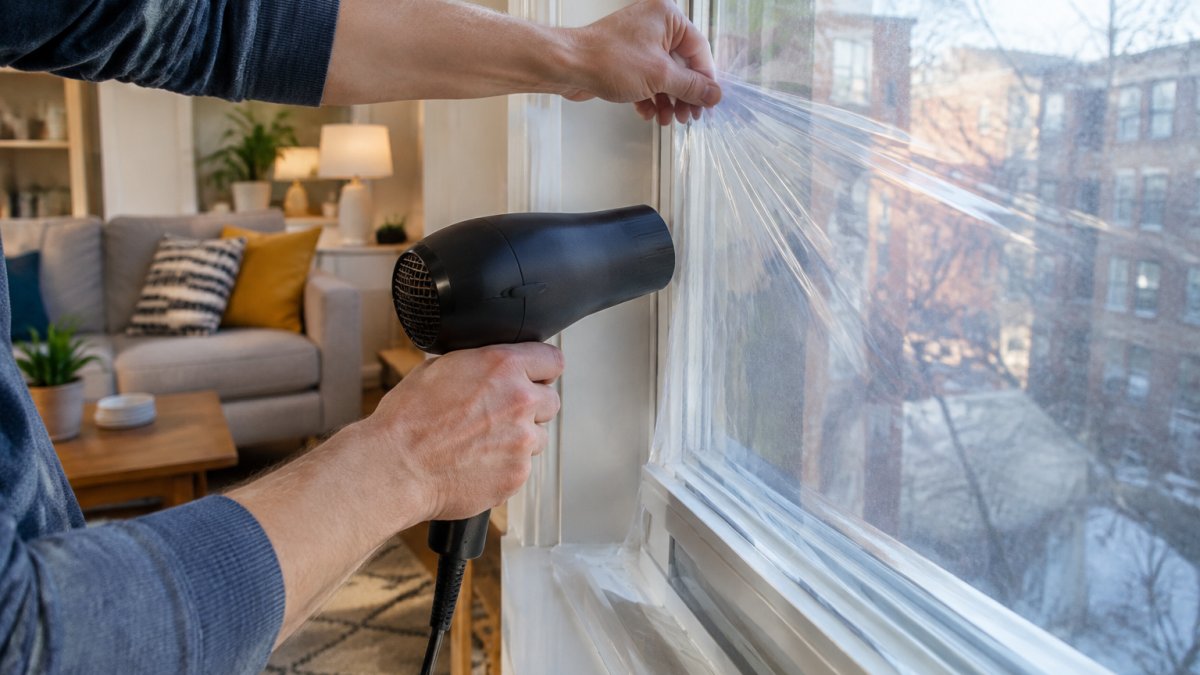
Here is the process:
- Clean the frame and let it dry fully
- Apply the double-sided tape around the whole frame
- Press the film onto the tape, starting at one corner
- Seal all edges, then smooth out wrinkles
- Warm the film with a hair dryer until it pulls tight
The film is removable. The EPA indoor air quality guidance notes that sealing air leaks also helps control moisture, which keeps condensation from building on cold glass.
The Cheapest Way to Insulate Windows for Winter
Bubble wrap and a draft stopper are low-cost options for insulating windows for winter. They need no tools and can be removed without damage.
Bubble Wrap Insulation and Draft Stoppers
Bubble wrap traps air against the glass. Cut a piece to the size of the pane, mist the glass with water, and press the flat side of the wrap against it.
A draft stopper, often called a draft snake, sits along the bottom of a door or a low sill. Fill a fabric tube with rice or sand and wedge it into the gap.
| Method | Time to Install | Removable | Best For |
|---|---|---|---|
| Weatherstripping | 10 minutes | Yes | Gaps at the sash |
| Caulk | 20 minutes | Mostly | Frame-to-wall gaps |
| Shrink film | 30 minutes | Yes | Whole-window seal |
| Bubble wrap | 5 minutes | Yes | Single-pane glass |
| Draft stopper | 2 minutes | Yes | Doors and low sills |
How to Insulate Apartment Windows for Summer
To insulate apartment windows for summer, you have to stop heat from entering, not just keep cool air from leaving. The same gaps that leak warm air out in winter let hot air in during summer, so sealing works both ways.
Start by identifying which problem you have. On a hot afternoon, touch the glass. If the pane is hot but the frame is not, you have solar gain and need reflection or shade.
Reflective Film and Solar Control
Reflective window film is a thin metalized sheet that adheres to the glass and bounces solar radiation back outside. It cuts glare and UV exposure and reduces the heat load on the room. The trade-off is light: most reflective films darken the room and can look mirror-like from outside, which some leases restrict for exterior appearance. Apply it to clean glass with a squeegee and a slip solution, and check that your lease allows exterior-visible film before you buy.
Thermal Curtains and Shade
Thermal curtains are heavy, tightly woven panels, often with a foam or acrylic backing, that slow heat transfer across the window. Close them during the hottest hours and open them in the evening to let cooler air in. The mechanism is simple: the fabric and the air gap between curtain and glass form a buffer that keeps the pane from radiating heat into the room.
Sealing for Summer
Seal frame gaps with weatherstripping exactly as you would in winter. Add a draft stopper at the base of any balcony door to hold cool air inside. If you run an air conditioner, sealing the gaps around the unit's window kit matters as much as sealing the window itself, because a loose kit leaks cooled air straight outside.
Window-Type Differences
- Single-hung and double-hung: the sash slides vertically, so weatherstrip the meeting rail and the sides of both sashes. Film works well because the frame is flat.
- Sliding windows: the sash slides horizontally and the overlap between panels is a common leak point. Weatherstrip the vertical meeting stile and the track.
- Casement: the sash cranks outward and seals against a compression gasket. If the gasket is worn, replace it rather than adding film, because film interferes with the crank hardware.
A common pattern is that summer savings come mostly from shading and sealing, not from added insulation value. Block the sun, seal the gaps, and the room stays cooler without touching the thermostat.
Thermal Curtains and Magnetic Window Inserts Compared
Thermal curtains and magnetic window inserts both improve insulating value, but they solve different problems and suit different renters. The right choice depends on whether your priority is thermal efficiency, noise, or light control, and on which window type you have.
How Each Works
Thermal curtains are heavy fabric panels, often with a foam or acrylic backing, hung on a rod. They slow heat transfer by trapping an air layer between the fabric and the glass, and they block light.
Magnetic window inserts are rigid panels, usually clear acrylic or polycarbonate, that snap to a steel frame mounted around the window.
Comparative Cost-Benefit
A practical way to prioritize is to compare cost per window against the benefit you actually feel. Curtains can cover more windows, but their thermal and acoustic gains are modest. Inserts are usually bought for one or two problem windows and deliver a larger thermal and noise improvement per window. Treat the decision as a priority ranking: seal the gaps first, then shade, then add inserts only where noise or a very drafty single-pane window justifies the spend.
Acoustic Insulation: The Overlooked Benefit
In a city apartment, street noise enters through the same gaps and glass that leak heat. Thermal curtains help a little by absorbing some sound inside the room, but they do not seal the window, so their acoustic benefit is limited. If noise is your main complaint, inserts are the better tool; if heat loss is the main complaint, curtains plus weatherstripping cover more windows for less.
Matching Product to Window Type
- Single-pane windows: inserts give the biggest thermal and acoustic gain because the sealed air pocket compensates for the glass.
- Sliding windows: curtains are easier because inserts need a flat mounting surface and the sliding sash hardware can interfere with the frame.
- Casement windows: curtains work better because the crank hardware and outward swing make a rigid insert frame awkward.
Choose thermal curtains if you want light control, a softer look, and coverage across many windows. Choose magnetic inserts if noise or a very drafty single-pane window is the problem and you are willing to spend more per window for a sealed, removable panel.
Troubleshooting Drafty Windows and Damage-Free Removal
Drafty windows usually trace back to one of four causes. Find the cause before you buy anything, or you will seal the wrong spot.
- Cold glass, no gap: single-pane heat loss, so use film or curtains
- Cold at the sash edge: worn weatherstripping, so replace the strip
- Cold at the wall line: a frame gap, so caulk it
- Cold under a door: a missing sweep, so add a draft stopper
For removal, warm any adhesive with a hair dryer before peeling. If you need supplies to clean up after the job, our guide to kitchen cleaning supplies for busy homes covers the basics that also work on window frames and sills.
Stock Up on Insulation Supplies at MixVanta
You can gather every supply in this guide in one order. MixVanta offers a diverse catalog of household supplies, so you can browse these items alongside everyday household products.
If you want more ways to cut utility costs after the windows are sealed, our guide on how to set up smart plugs for energy saving pairs well with this work. And when you are ready to browse, our household supplies collection has the sealing and insulation materials in one place.
MixVanta offers global currency support and free shipping options. Our 30-day money-back guarantee applies to eligible purchases.
Frequently Asked Questions
Can renters use window insulation film without losing their deposit?
Yes, most shrink film kits use double-sided tape that peels off cleanly when you warm it slightly with a hair dryer. Test a small corner first, pull slowly at a low angle, and remove any adhesive residue with warm soapy water. Avoid film on frames with peeling paint or loose finishes, since tape can lift flaking layers. Keep your receipt and take photos before and after removal so you have proof the window was left undamaged.
What is the cheapest way to insulate windows for winter?
Bubble wrap taped to the glass, inside facing out, costs very little and traps a layer of air that reduces heat loss through single-pane windows. Pair it with rolled-up towels or a fabric draft stopper along the sill and weatherstripping on the sash edges. For a slightly higher spend, a shrink film kit covers a whole window for a modest amount. Combine two or three of these methods rather than relying on one.
How do I keep cold air from coming through apartment windows I cannot modify?
Start with the gaps you can reach: press foam weatherstripping into the sash channels, run a bead of removable caulk along visible cracks, and lay a draft stopper on the sill. Shrink film over the entire frame creates a sealed air pocket without drilling or permanent adhesive. If air still moves, a heavy thermal curtain hung close to the glass adds another barrier. Report persistent structural drafts to your landlord in writing.
How can I insulate apartment windows against summer heat?
Block the sun before it enters. Reflective window film cuts solar gain on west- and south-facing glass, and light-blocking thermal curtains keep afternoon heat out. Seal the same gaps you would in winter so hot outside air stays outside, and run a fan near a shaded window in the evening to pull cooler air in. Close curtains during peak sun and open them after the direct light passes.
Your apartment windows do not have to stay drafty just because you rent. Sealing gaps, adding film, and hanging thermal curtains are small jobs that pay off on every energy bill. MixVanta makes it easy to get the supplies in one order, with free shipping over $70, fast handling, and a 30-day money-back guarantee. Get started with MixVanta and seal your windows this weekend.


