


Table of Contents
- The Psychology of Free Shipping: Why 'Free' Feels So Good
- The Impact of Shipping Costs on Cart Abandonment
- Setting the Right Minimum Order Value for Free Shipping
- The Hidden Costs of Free Shipping: Logistics and Fulfillment
- Free Shipping vs. Flat Rates: A Comparison of Strategies
- Does Free Shipping Build Brand Loyalty or Attract Deal-Hunters?
- Frequently Asked Questions
Last Updated: September 16, 2026
The Psychology of Free Shipping: Why 'Free' Feels So Good
Is free shipping actually worth it? It depends on your margins, your order values, and whether you can turn the psychology of free shipping into repeat purchases rather than one-time bargain hunting. This guide breaks down the real math, from break-even thresholds to the hidden fulfillment costs most sellers underestimate.
The reason free shipping works at all comes down to how buyers process the word "free."
The Zero-Price Effect and Perceived Value
The zero-price effect is the tendency to overvalue a product or perk the moment its price drops to zero, even when a small cost would otherwise be trivial. A shipping fee and a slightly higher product price can be mathematically identical, but they do not feel identical at checkout.
How Free Shipping Triggers Impulse Purchases
Removing a shipping charge shortens the pause between "I want this" and "I'll buy it", the pause where carts die. When the final number matches the number in the shopper's head, the decision gets faster.
The trade-off: removing friction also removes deliberation.
The Impact of Shipping Costs on Cart Abandonment
Unexpected shipping costs are one of the most frequently cited reasons shoppers abandon a cart at checkout. The pattern is consistent across store sizes: a buyer adds items, reaches the payment step, sees a shipping line that was not visible earlier, and leaves. According to Baymard Institute's ongoing cart abandonment research, extra costs are a leading driver of abandoned checkouts, and most of that damage happens in the final step.
Where the Leak Actually Happens
Cart abandonment is not one event but at least four, and shipping cost hits each differently:
- Product page exit, the shopper never adds to cart because no shipping estimate is shown. Hardest to measure, easiest to fix with a shipping estimator widget.
- Cart page exit, the shopper sees a subtotal, guesses at shipping, and bails before committing. A persistent cart summary with a live shipping estimate recovers a meaningful share of these.
- Checkout step 1 exit, the shopper enters an address and finally sees the real number. This is the highest-intent abandonment and the most expensive one to lose.
- Payment step exit, the shopper sees the full total including tax and shipping side by side for the first time. Surprise peaks here.
The fix is rarely "make shipping free." It is usually "show the real total earlier." Displaying shipping costs on the product page or in a persistent cart summary removes the surprise, and surprise is the actual trigger.
How Cart Value Changes the Calculus
Shipping cost sensitivity is not uniform. A common pattern:
| Cart value band | Dominant behavior | Best shipping response |
|---|---|---|
| Under $25 | Highly fee-sensitive; shipping can exceed 20% of cart | Flat low rate or free over a nearby threshold |
| $25-$75 | Threshold-motivated; will add an item to clear the bar | Free shipping threshold with a visible progress bar |
| $75-$150 | Fee-tolerant; cares more about speed and tracking | Free shipping plus a paid expedited upgrade |
| Over $150 | Shipping is noise; returns and delivery window matter more | Free shipping as default, invest in reverse logistics |
A single policy applied uniformly will over-subsidize small carts and under-serve large ones.
Device and Session Context
Mobile shoppers abandon at higher rates than desktop shoppers across nearly every study of checkout behavior, and part of that gap is friction, not price. A shipping cost revealed on a cramped mobile screen reads as a bait-and-switch in a way the same number on desktop does not. Two fixes:
- Show the shipping estimate inline on the mobile product page, not buried behind a shipping tab.
- Keep the cart summary sticky on mobile so the running total never disappears from view.
The Real Fix Is Transparency, Not Free
For a marketplace handling many categories and destinations, clear policy beats clever marketing. MixVanta shows shipping terms upfront so buyers see the real number before they commit, cutting the checkout shock that drives abandonment.
Setting the Right Minimum Order Value for Free Shipping
The right minimum order value for free shipping is the number at which your average order can absorb the shipping cost without your margin going negative. Set it too low and you subsidize every small order; too high and the threshold stops motivating anyone.
To find it: take your average fulfillment cost per parcel, add packaging and handling, then divide by your target gross margin percentage. That figure is your floor, your threshold should sit above it.
Calculating Your Break-Even Threshold
| Input | Example | Why It Matters |
|---|---|---|
| Average fulfillment cost | $8 per parcel | Sets the subsidy you absorb |
| Packaging and handling | $2 per order | Often forgotten in the math |
| Target gross margin | 40% | Determines how much you can absorb |
| Break-even order value | $25 | Floor for your threshold |
| Recommended threshold | $35-$40 | Adds buffer for returns and variance |
Use the table as a template, not a prescription. Plug in your own fulfillment cost, packaging time, and margin target, then set the threshold above break-even.
The Hidden Costs of Free Shipping: Logistics and Fulfillment
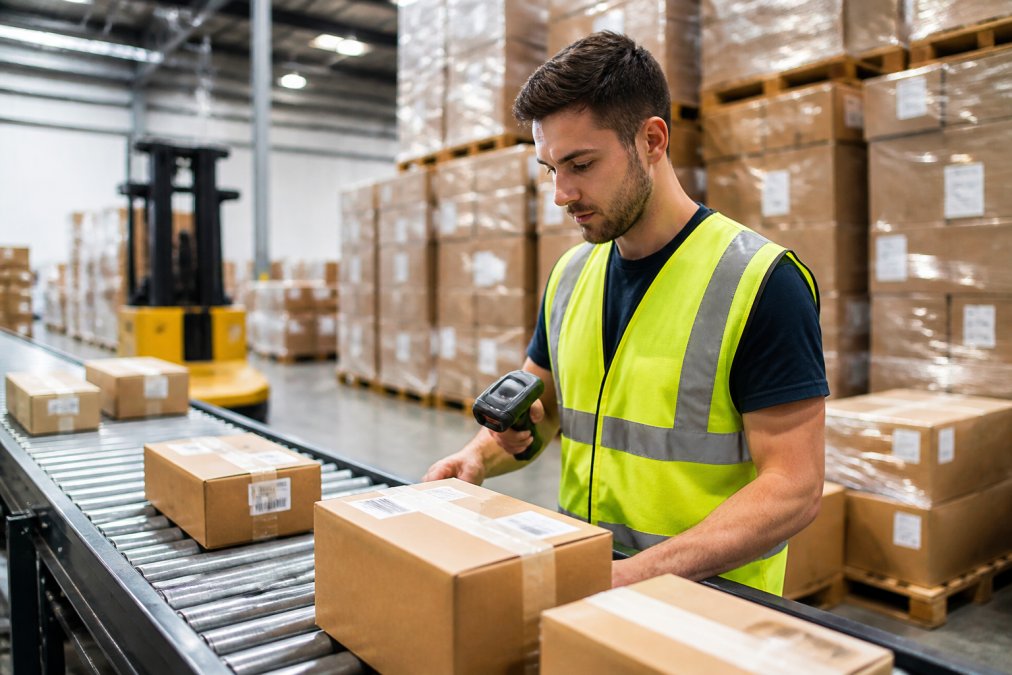
Free shipping does not eliminate shipping costs.
Free Shipping vs. Flat Rates: A Comparison of Strategies
| Strategy | Best For | Main Risk | Effect on Order Value |
|---|---|---|---|
| Unconditional free shipping | High-margin, light products | Margin erosion on small orders | Slight decrease |
| Threshold free shipping | Most stores with mixed catalogs | Threshold set too high | Increase via upselling |
| Flat-rate shipping | Heavy or bulky items | Cart abandonment at checkout | Neutral |
| Tiered shipping | Stores testing multiple segments | Complexity at checkout | Moderate increase |
| Membership shipping | Repeat-purchase catalogs | Upfront commitment friction | Strong increase in frequency |
Industry Benchmarks: What "Normal" Looks Like
| Sector | Typical free-shipping threshold | Typical flat rate | What drives the difference |
|---|---|---|---|
| Apparel and footwear | Mid-range threshold | Low flat rate | High return rates force margin buffer |
| Electronics and accessories | Higher threshold | Rarely offered | Low unit margin, high fraud risk |
| Home goods and furniture | High threshold or none | Weight-based | Dimensional weight dominates cost |
| Beauty and personal care | Low threshold | Low flat rate | Light, compact, high repeat rate |
| Pet supplies | Low-to-mid threshold | Low flat rate | Subscription behavior rewards loyalty perks |
The Alternatives Most Guides Ignore
Membership-based shipping. A paid annual membership with free shipping on every order converts shipping from a per-transaction cost into predictable subscription revenue. It works best when customers already order frequently, since the fee amortizes across many orders. The trade-off is upfront commitment friction: one-time shoppers will not buy in, so it only pays off for catalogs with genuine repeat-purchase behavior.
How to Choose
A simple decision sequence:
- If your average order value already absorbs fulfillment cost comfortably, unconditional free shipping is the strongest conversion lever.
- If your catalog is mixed, use a threshold set above break-even with a visible progress bar.
- If your catalog is heavy or bulky, use flat-rate or weight-based pricing and invest the savings in faster delivery.
- If your customers order frequently, test a membership tier, it converts shipping from a cost center into a retention mechanism.
Does Free Shipping Build Brand Loyalty or Attract Deal-Hunters?
Free shipping builds loyalty only when paired with something the customer cannot get elsewhere.
Frequently Asked Questions
Is it worth it to offer free shipping?
It depends on your profit margin and average order value. Free shipping can increase conversion rates and reduce cart abandonment, but it eats into your margins. If your margins are tight, consider a minimum order value for free shipping to encourage larger baskets. If your margins are healthy, offering free shipping can be a competitive advantage that builds customer loyalty and repeat purchases.
What are the drawbacks of free shipping?
The main drawbacks include lower profit margins, higher logistics costs, and the risk of attracting deal-hunters who never return. Free shipping also sets a customer expectation that can be hard to roll back. Additionally, if you use a minimum order value, you might frustrate customers who don't meet the threshold, leading to cart abandonment. It's essential to weigh these drawbacks against the potential increase in sales.
Do companies lose money on free shipping?
Companies don't necessarily lose money if they structure free shipping correctly. Many absorb the cost by building it into product prices, setting a minimum order value, or negotiating lower shipping rates with carriers. However, if free shipping is offered without a strategy, it can erode profits. The key is to calculate your break-even point and ensure that the increase in order volume and customer lifetime value offsets the shipping expense.
How do retailers absorb the cost of free shipping?
Retailers absorb free shipping costs through several methods: raising product prices slightly, setting a minimum order value to increase average order value, negotiating discounted shipping rates with carriers, or using free shipping as a promotional tool during slow periods. Some retailers also reduce packaging costs or use slower shipping methods. The goal is to make free shipping sustainable without sacrificing profitability.


