


Table of Contents
- What You'll Need Before Starting
- Step 1: Assess Your Current Wardrobe and Define Your Personal Style
- Step 2: Create Your Seasonal Capsule Wardrobe Checklist
- Step 3: Choose Your Color Palette and Essential Wardrobe Staples
- Step 4: Master Capsule Wardrobe Outfit Formulas
- Step 5: How to Declutter Your Closet for a Capsule Wardrobe
- Minimalist Fashion Trends 2026: Building for Longevity
- Common Mistakes to Avoid When Building Your Seasonal Capsule Wardrobe
- Frequently Asked Questions
Last Updated: October 2, 2026
What You'll Need Before Starting
Building a seasonal capsule wardrobe requires honest self-assessment. Gather a full-length mirror, notebook, and two hours of uninterrupted time. Pull everything from your closet or work section by section. Most people wear 20% of their clothes 80% of the time, that gap is where your seasonal capsule wardrobe opportunity lives.
Photograph pieces for a digital inventory, invaluable for shopping and planning later. Be realistic about your lifestyle: a corporate worker needs different staples than someone working from home. Your capsule should reflect how you actually spend your time.
Step 1: Assess Your Current Wardrobe and Define Your Personal Style
Categorize existing pieces by type: tops, bottoms, outerwear, dresses, and accessories. Remove anything unworn for a year that doesn't spark genuine excitement, it's not serving your life.
Identify your personal style by reviewing outfits you've worn and felt confident in. Notice patterns: shared color stories, fabric weights, or vibes. Your style is already visible in your choices.
Comfort matters as much as aesthetics. Pieces that fit your body and proportions are pieces you'll actually wear. Your capsule should celebrate your proportions, not fight them.
Step 2: Create Your Seasonal Capsule Wardrobe Checklist
A seasonal capsule wardrobe typically includes 30-40 pieces. Adjust based on your lifestyle and climate:
Basics (5-7 pieces): White t-shirt, black t-shirt, neutral long-sleeve top, basic tank or camisole, plain sweater Bottoms (4-5 pieces): Dark jeans, neutral trousers, casual pants, one skirt or shorts (depending on season) Outerwear (2-3 pieces): Cardigan or blazer, jacket suited to your climate, coat for cold weather Dresses (1-2 pieces): One casual dress, one dressier option if your lifestyle calls for it Layering pieces (2-3 pieces): Lightweight sweater, button-up shirt, turtleneck (seasonal) Shoes (4-5 pairs): Comfortable everyday shoe, professional shoe, casual sneaker, one elevated option, weather-appropriate shoe
Adjust this framework to your lifestyle. Skip the professional shoe if you work from home; adjust outerwear for your climate.
| Category | Number of Pieces | Purpose | Seasonal Consideration |
|---|---|---|---|
| Basics | 5-7 | Foundation for mixing and matching | Adjust fabric weight by season |
| Bottoms | 4-5 | Core layering and styling | Include season-appropriate weights |
| Outerwear | 2-3 | Protection and silhouette | Must match your climate |
| Dresses | 1-2 | Versatile one-piece options | Layer for cooler seasons |
| Layering Pieces | 2-3 | Extend outfit range | Critical for transitional weather |
| Shoes | 4-5 | Complete outfits functionally | Include weather-appropriate pairs |
Every piece should work with at least three others. If a sweater can't layer under your jacket or pair with multiple bottoms, it's not capsule material.
Step 3: Choose Your Color Palette and Essential Wardrobe Staples
Choose 2-3 neutral base colors (black, white, gray, beige, navy, brown) that flatter your skin tone, plus 1-2 accent colors. Pick what works for you, not universal rules.
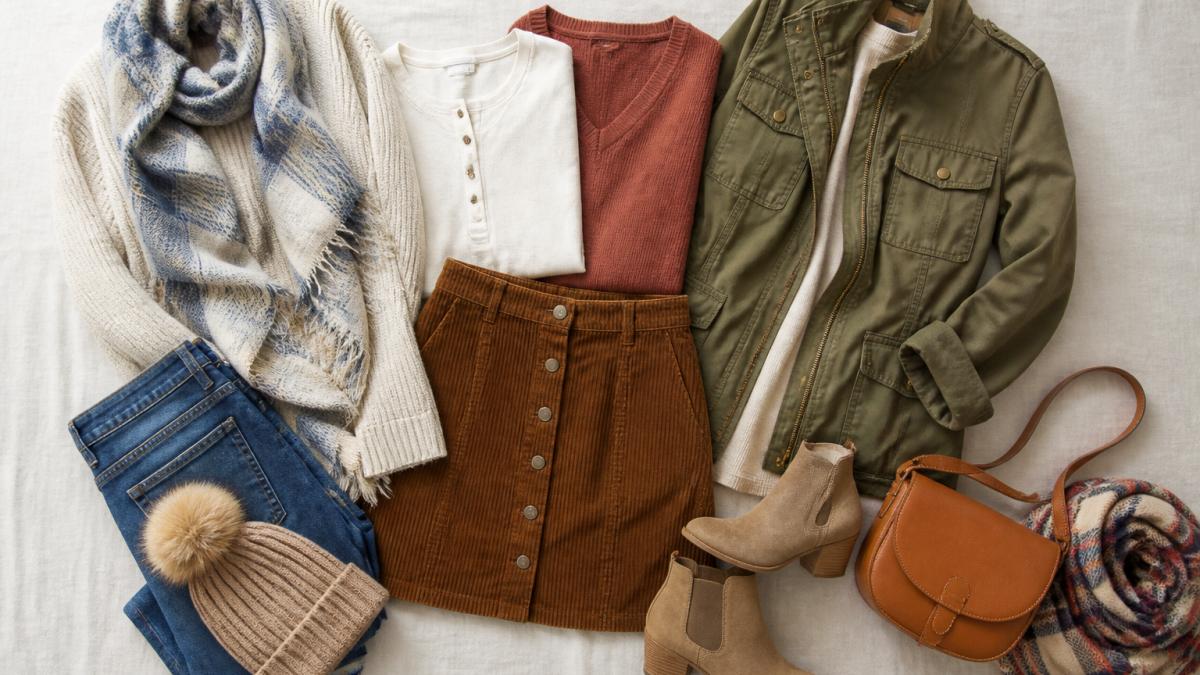
Accent colors bring personality. Limit yourself to two per season to maintain cohesion and prevent color chaos.
Prioritize quality over quantity. Look for natural fibers (cotton, linen, wool, silk) and check seams, hems, and construction. These details determine cost-per-wear.
Consider pieces like the High Waist A-Line Corduroy Skirt for Women from MixVanta. A quality skirt in a neutral or accent color becomes a workhorse piece. The A-line silhouette flatters most body types, and corduroy's texture adds interest without being trendy. Pair it with basics from your capsule and you've created multiple outfits from one piece.

Step 4: Master Capsule Wardrobe Outfit Formulas
Once you have your pieces, the real power of a seasonal capsule wardrobe emerges in how you combine them. An outfit formula is a simple equation: base + top + layer + shoe.
Start with your bottoms as your base. Let's say you have dark jeans, neutral trousers, and a corduroy skirt. That's three bases. Now layer in your tops: white tee, black tee, neutral sweater, button-up shirt. Each top works with each base, creating 12 combinations already. Add your outerwear, cardigan, blazer, jacket, and suddenly you have 36 potential outfits before accessories even enter the picture.
The real skill is understanding which combinations work together. This is where color palette discipline pays off. If everything in your capsule works within your chosen neutrals and accents, nearly every combination will feel intentional rather than random.
Accessories amplify your outfit formulas without expanding your capsule. A simple outfit transforms completely with different shoes, a belt, or a scarf.
Practice the "day-to-night transition" formula. Can your workday outfit become an evening look with one or two swaps? Change your shoes from flats to heels. Swap your cardigan for a blazer.
Step 5: How to Declutter Your Closet for a Capsule Wardrobe
Decluttering for a capsule wardrobe isn't about minimalism for its own sake. It's about removing friction between you and the clothes you actually want to wear. Start by removing anything that doesn't fit.
High Waist A-Line Corduroy Skirt for Women →
Next, remove anything damaged beyond repair or items you genuinely dislike. Be honest about this. If you've never loved something, you won't suddenly love it in your capsule. Remove pieces that don't match your color palette.
The trickiest category is pieces you love but rarely wear. Ask yourself why. Is it impractical for your lifestyle? Does it not work with anything else in your closet? Is it uncomfortable?
As you declutter, consider donating or selling pieces in good condition.
Minimalist Fashion Trends 2026: Building for Longevity
The fashion landscape in 2026 continues to shift toward sustainability and intentionality. Fast fashion is losing appeal as people recognize the environmental and financial cost of constant consumption.
Quality fabrics and construction are increasingly central to how people shop. Natural fibers, ethical manufacturing, and timeless design matter more than novelty.
The tracksuit has made a notable comeback and represents exactly what a capsule wardrobe should be: functional, versatile, and stylish. Consider pieces like the Track Suit from MixVanta, which works for exercise, travel, casual outings, and relaxation. A quality tracksuit in a neutral color becomes a go-to outfit that requires zero decision-making while still looking intentional.

Digital wardrobe planning is becoming mainstream. Many people now photograph their capsule pieces and use apps or notes to plan outfits before getting dressed. This practice eliminates decision fatigue and ensures you're actually wearing everything you own.
Layering remains essential for a functional seasonal capsule wardrobe. The ability to adjust your outfit's warmth and visual weight throughout the day is practical and stylish. Invest in quality layering pieces that work across multiple outfits.
Common Mistakes to Avoid When Building Your Seasonal Capsule Wardrobe
The biggest mistake is buying pieces in isolation without considering how they'll work with the rest of your wardrobe.
Another common error is ignoring your actual lifestyle. You build a capsule full of dressier pieces when you work from home.
Many people underestimate the importance of fit. A piece that's technically your size but doesn't fit your proportions will never feel right.
Holding onto pieces "just in case" sabotages your capsule. That fancy dress you might wear to a wedding next year? If it doesn't work with your current lifestyle, it's taking up valuable space.
Finally, avoid the trap of thinking your capsule is finished. Seasons change, your body changes, your lifestyle evolves. Your seasonal capsule wardrobe should be reviewed and adjusted each season.
Building a seasonal capsule wardrobe requires intentionality, but the payoff is substantial. You'll spend less time deciding what to wear, less money on clothes, and more time actually enjoying the pieces you own. At MixVanta, we understand that quality pieces matter, whether it's a High Waist A-Line Corduroy Skirt or a Track Suit that works across multiple seasons. Start with honest assessment, build around a cohesive color palette, and commit to pieces that actually serve your life. Your closet, and your mornings, will thank you.
Frequently Asked Questions
What is a seasonal capsule wardrobe?
A seasonal capsule wardrobe is a curated collection of versatile, timeless essentials designed for one season. It typically includes 25-40 pieces that mix and match to create multiple outfits. Unlike a full closet, a capsule wardrobe focuses on quality investment pieces in coordinating colors that work together. This approach reduces decision fatigue, saves money through cost-per-wear analysis, and makes getting dressed simpler while maintaining a polished, intentional look.
How many items should be in a seasonal capsule wardrobe?
Most seasonal capsule wardrobes contain 25-40 pieces, though the ideal number depends on your lifestyle and how often you do laundry. A smaller capsule (20-25 pieces) works well for minimalist fashion trends and frequent travelers, while 35-40 pieces suits those who prefer more outfit variety. Count only items you actually wear. Focus on quality over quantity, a few well-made pieces you love will serve you better than many mediocre items.
How do I transition my capsule wardrobe between seasons?
Begin transitioning 2-3 weeks before the season changes. Store off-season items in labeled bins and rotate in new pieces gradually. Invest in layering pieces like a lightweight tracksuit that bridge seasons. Keep neutral tones consistent across seasons for easier mixing. Assess what worked last season and adjust your new capsule accordingly. This day-to-night transition approach ensures you're never caught without appropriate pieces while maintaining your core wardrobe foundation.
How can I build a capsule wardrobe on a budget?
Start with investment pieces from trusted retailers like MixVanta, which offers free shipping and competitive deals. Prioritize quality basics over trendy items, a High Waist A-Line Corduroy Skirt or neutral tracksuit provides better cost-per-wear value. Buy fewer pieces in neutral tones that mix and match easily. Shop sales strategically and focus on timeless essentials rather than seasonal trends. Consider fabric quality and durability to ensure pieces last multiple seasons, ultimately saving money through reduced replacement costs.


