


Table of Contents
- Switch to Cold Water Washing: Benefits and Best Practices
- Choose the Best Eco-Friendly Laundry Detergents for Your Family
- Air Dry Your Clothes to Reduce Energy Use
- How to Reduce Microplastics in Laundry
- Wash Full Loads and Sort Strategically
- Use Natural Stain Removers and Fabric Care
- Protect Delicate Items and Sports Gear with Specialized Washing
- Frequently Asked Questions
Last Updated: September 22, 2026
Switch to Cold Water Washing: Benefits and Best Practices
Cold water washing is one of the simplest eco-friendly laundry solutions, helping families reduce their laundry's environmental impact while saving energy. Running hot water cycles accounts for a significant portion of household energy consumption, so switching to cold water immediately cuts that load.
The benefits extend beyond energy savings. Cold water protects fabric longevity, colors stay brighter, delicate fibers resist damage, and synthetic fabrics resist breakdown from heat exposure. For most loads, cold water paired with modern detergents cleans just as effectively as warm or hot water.
To get the most from cold water washing, sort loads by fabric type. Heavily soiled items benefit from a pre-soak in cold water with a stain-fighting additive. Run full loads whenever possible, this maximizes efficiency and reduces the total number of wash cycles your family runs per week.
Choose the Best Eco-Friendly Laundry Detergents for Your Family
Not all detergents are created equal when it comes to environmental impact. Conventional detergents often contain phosphates and synthetic chemicals that accumulate in waterways, harming aquatic ecosystems. Plant-based and biodegradable alternatives break down naturally without leaving toxic residue.
Look for detergents labeled as biodegradable and free from phosphates, chlorine, and synthetic fragrances. Concentrated formulas reduce packaging waste, you use less product per load, which means fewer plastic bottles in landfills. Laundry strips represent the newest innovation in this space: they're compact, pre-measured, and eliminate excess water weight in shipping.
According to EPA guidance on sustainable cleaning products, biodegradable detergents that meet environmental standards break down within 28 days in aquatic environments, protecting water quality for communities downstream.
Cost-Benefit Analysis for Family Budgets
While eco-friendly detergents often carry a higher per-bottle price tag, the total cost per load typically favors concentrated and strip formulas.
Many families find that switching to plant-based detergents reduces skin irritation, especially for children with sensitive skin. Hypoallergenic formulas work well for households with allergies or eczema concerns. Test a small load first to confirm compatibility with your water type and washing machine.
Air Dry Your Clothes to Reduce Energy Use
Air drying eliminates energy consumption entirely, no electricity, no heat, no wear on your dryer. This single change can reduce household energy use by 3-5% annually, depending on your climate and how frequently you dry clothes.
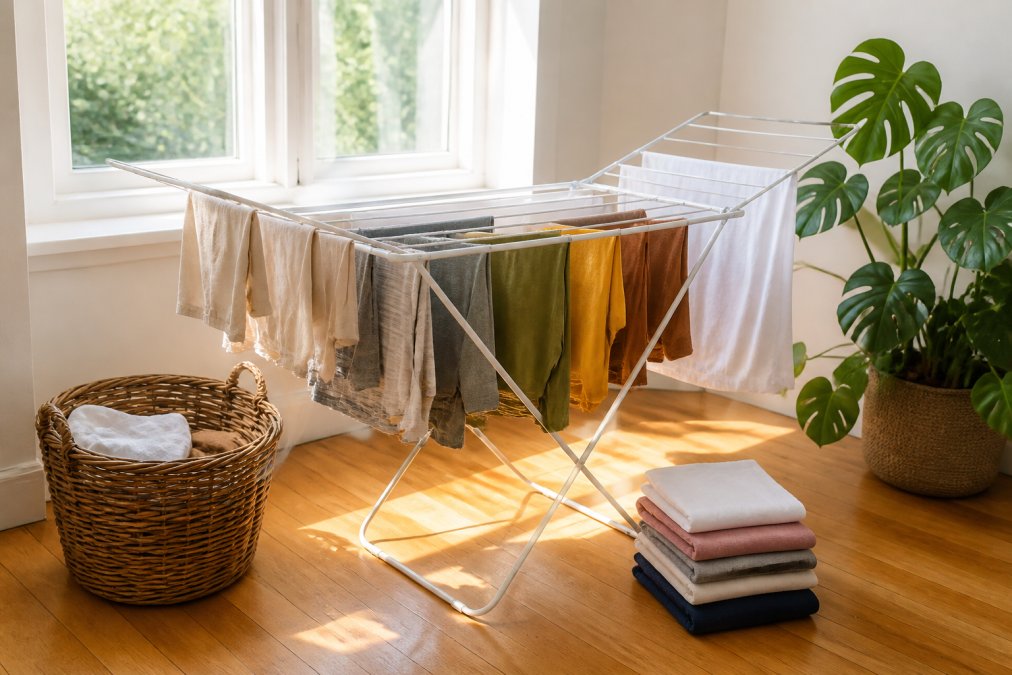
Set up a dedicated drying space in your home. A clothesline in a sunny window, a freestanding drying rack, or even a shower rod works well. In humid climates, air circulation matters more than direct sunlight, position racks near a fan or open window to speed drying time.
Delicate items benefit most from air drying: underwear, bras, and lightweight knits maintain their shape and elasticity without heat stress. Heavier items like towels and jeans still dry outdoors on a clothesline, though they may take longer. Many families find that a combination approach, air drying delicates and lighter items indoors, using the dryer only for heavy fabrics, strikes a practical balance.
How to Reduce Microplastics in Laundry
Microplastics from synthetic clothing shed into wastewater during washing cycles. These tiny fibers accumulate in oceans and freshwater systems, entering food chains and harming aquatic life. Reducing microplastic release protects water quality for your community.
Synthetic fabrics like polyester, nylon, and acrylic shed microfibers more readily than natural materials. Wash synthetic items less frequently, use cold water cycles, and reduce agitation by selecting gentle wash settings.
When purchasing new clothing, prioritize natural fibers: cotton, linen, wool, and hemp shed far fewer microplastics. For existing synthetic garments, minimize washing frequency by spot-cleaning stains and airing out clothes between wears instead of washing after single use.
Research from Ocean Wise guidance on microfiber pollution emphasizes that reducing synthetic fabric washing frequency is the most effective household strategy for limiting microplastic release into marine ecosystems.
Wash Full Loads and Sort Strategically
Running fewer, fuller wash cycles is one of the most practical eco-friendly laundry solutions for busy families. Each cycle consumes water and energy regardless of load size, so filling the machine maximizes efficiency per wash.
Sort strategically to protect garment longevity while enabling full loads. Separate whites from colors to prevent dye transfer, then sort by fabric weight: heavy items (jeans, towels) in one load, lightweight items (shirts, underwear) in another. This approach ensures proper water penetration and drying time for each load type.
Most modern machines have a load-capacity indicator. Fill to that line, but don't overpack, clothes need space to move freely for effective cleaning. Overloading reduces wash quality and can strain the machine's motor over time.
Use Natural Stain Removers and Fabric Care
Commercial stain removers often contain harsh chemicals that require extra rinse cycles, using additional water and energy. Natural alternatives work effectively and break down completely in wastewater systems.
White vinegar, baking soda, and essential oils form the foundation of natural stain removal. For protein-based stains (blood, egg), apply cold water first, then rub with baking soda paste. For grease stains, sprinkle baking soda directly on the spot and let it sit for 15 minutes before washing. White vinegar cuts through mineral deposits and brightens whites without bleach.
Combine these ingredients strategically: a paste of baking soda and water removes set-in stains, while white vinegar added to the rinse cycle brightens fabric and eliminates odors. For stubborn stains, soak the garment in a mixture of water and white vinegar for 2-4 hours before washing.
Essential oils like lavender and tea tree oil provide natural fragrance without synthetic perfumes. Add 5-10 drops to your rinse cycle or to a wool dryer ball for scent without chemicals.
Protect Delicate Items and Sports Gear with Specialized Washing
Delicate fabrics and specialized gear require different washing approaches than everyday clothing. Mesh laundry bags protect shoes, sports bras, and delicate knits during machine washing, preventing snags, stretching, and damage.

The American Cleaning Institute guidelines on fabric care recommend using gentle cycles with cold water for items containing elastic, mesh, or waterproof coatings to extend their lifespan and maintain performance.
Managing High-Volume Sports Laundry Sustainably
Families with multiple athletes face a unique challenge: synthetic performance fabrics (polyester, nylon, spandex blends) shed microfibers at higher rates when washed frequently, yet sports gear requires regular cleaning for hygiene and odor control.
To reduce environmental impact without sacrificing cleanliness, adopt a tiered washing strategy:
Moisture-wicking base layers and compression wear shed the most microfibers. Wash these items in a mesh laundry bag on a gentle cycle with cold water. Limit washing to every 2-3 wears if the item is not visibly soiled, air drying between uses and spot-cleaning sweat stains with a damp cloth extends the interval between full washes.
Outer athletic layers (jerseys, shorts, warm-up pants) tolerate normal cold-water cycles. Wash these with full loads of similar items to maximize efficiency. A full load of athletic wear uses the same water volume as a half-load, so batching across 3-4 days ensures you're filling the machine completely.
Athletic footwear and cleats should be hand-rinsed or placed in a mesh bag on a delicate cycle.
Socks and undergarments can be washed separately on a normal cold-water cycle, as they shed fewer microfibers and tolerate standard agitation.
Water and Energy Impact
Sports gear like moisture-wicking shirts, compression wear, and athletic shoes benefit from specialized care. Use a mesh laundry bag to protect these items during washing; the breathable design allows water and detergent to flow through while preventing tangling and friction damage.
For families with young children, wash school uniforms and play clothes separately from delicate items. This prevents pilling and color fading while ensuring that delicate fabrics receive gentler treatment. Specialized washing extends garment life, reducing the need for frequent replacements and ultimately lowering household waste.
Frequently Asked Questions
What are the benefits of cold water washing for families?
Cold water washing cuts energy consumption by up to 90% compared to hot water cycles, lowering your utility bills significantly. It also protects fabric colors, extends textile longevity, and reduces your household's carbon footprint. For most everyday loads, cold water cleans just as effectively as warm water when paired with modern detergents formulated for low temperatures.
How do I choose the best eco-friendly laundry detergents?
Look for detergents with biodegradable, plant-based formulas that lack synthetic chemicals and are non-toxic to aquatic ecosystems. Check for eco-certifications and hypoallergenic formulations if your family has sensitive skin. Concentrated detergents and laundry strips reduce packaging waste and water usage. Start with small amounts, concentrated formulas are more efficient than traditional liquid detergents.
How can I reduce microplastics from synthetic fabrics during laundry?
Use a specialized laundry bag designed to capture synthetic particles before they enter wastewater. Wash synthetic fabrics less frequently and at lower spin speeds to minimize fiber shedding. Choose natural fabrics like cotton and wool when possible. A Shoe Clean Laundry Bag ($27.63) protects delicate footwear while reducing microplastic release during washing cycles.
Can eco-friendly laundry practices really save money for families?
Yes. Cold water washing, air drying, and full-load washing cut energy and water costs by 30-50% annually. Concentrated detergents and laundry strips cost less per load than traditional bottles. Reusable items like beeswax food storage cloths ($16.11-$19.99) replace disposable plastic wraps, lowering household expenses over time while reducing waste.


