


Last Updated: October 25, 2026
Quick Summary
The benefits of using a portable electric steam iron for delicates include faster wrinkle removal than a steamer alone, the ability to work on both hanging and flat fabrics, and better control for sharp creases in structured delicates. Steam relaxes fabric fibers without the flattening effect of direct pressure, making it safer for fragile materials like silk, chiffon, and linen.
- Always read the care label and test a hidden area before steaming any delicate garment
- Hold the soleplate 1-2 inches from most delicates and move slowly in one direction without pressing down
- Use the low temperature setting for silk, chiffon, and thin synthetics to prevent damage
- A portable steam iron typically has a 50-milliliter water tank and two temperature settings for different fabric types
- Let steamed garments air dry completely before wearing or storing to prevent stretching and new wrinkles
Table of Contents
- Why Delicate Fabrics Need Special Care
- Steam Iron vs Clothes Steamer: Which Works Better for Delicates
- How to Steam Delicate Fabrics Without Damage
- Steaming Silk Clothes: Safe Techniques and Best Practices
- Finding the Best Steamer for Delicate Clothes
- Portable Electric Steam Irons for Travel and Quick Touch-Ups
- Frequently Asked Questions
Why Delicate Fabrics Need Special Care
Delicate fabrics like silk, chiffon, and linen have fragile fibers that can break, shrink, or scorch under high heat and pressure. Learn about ethical clothing alternatives that may require similar delicate handling.
The benefits of using a portable electric steam iron for delicates go beyond just convenience. Steam works differently than a traditional iron.
A portable electric steam iron uses moisture and gentle heat to soften wrinkles, penetrating fibers without flattening them, safer for fabrics that can't handle direct iron pressure.
Steam Iron vs Clothes Steamer: Which Works Better for Delicates
A steam iron and a clothes steamer are not the same tool, even though both use steam.
A traditional clothes steamer applies steam vertically to a hanging garment, no pressure, no hot plate contact, no shine marks.
A portable electric steam iron combines steam with a heated soleplate, gliding across fabric like a traditional iron while steam lifts wrinkles.
For delicate fabrics, the key difference is control. A steamer is gentler but slower. A portable steam iron is faster but requires more care with temperature settings and technique. The benefits of using a portable electric steam iron for delicates include:
- Faster wrinkle removal than a steamer alone
- Works on both hanging and flat fabrics
- Better for sharp creases in structured delicates
- More compact and portable than full-size steamers
If you're packing for travel or need quick touch-ups at home, a portable electric steam iron offers speed and convenience.
How to Steam Delicate Fabrics Without Damage
Steaming delicate fabrics safely comes down to four things: reading the care label, matching heat to fiber, controlling distance and motion, and managing water and cooldown. Miss them and you risk scorching, shine, or fiber weakening.
Start With the Care Label, Not the Fabric Name
Before you plug in, read the garment's care label. The symbols tell you more than the fiber name does:
- A steam symbol with a slash through it means do not steam, often found on some rayons, acetates, and waxed or coated fabrics.
- A single dot inside the iron symbol means low heat; two dots means medium; three means high. Delicates almost always fall in the one-dot or two-dot range.
- A hand-wash or dry-clean-only symbol is a signal to test a hidden area first, even if the fiber is one you have steamed before.
- "Do not iron" means do not press a hot soleplate to the fabric; some of these items can still be steamed at a distance, but test first.
When the label is missing, treat the item as the most fragile category until a test patch proves otherwise.
Fabric-by-Fabric Settings and Technique
A portable electric steam iron typically offers a low and a high setting.
Silk and silk blends, Low setting.
Chiffon, Low setting, steamed from 2-3 inches because the sheer fabric passes heat quickly. Support it from behind or hang it so it doesn't stretch under its own weight.
Lace, Low setting.
Wool and wool blends, Low to medium. Wool relaxes under steam but can felt or shrink from too much direct heat.
Thin synthetics (polyester, nylon), Low setting.
Linen and cotton blends, Medium to high, depending on the blend.
Distance, Motion, and the Test Patch
How close you hold the iron and how you move it matter as much as the setting:
- Hold the soleplate 1-2 inches from most delicates; 2-3 inches for sheer fabrics like chiffon.
- Move slowly and steadily in one direction. Never press down or apply the iron's weight.
- Never leave the iron stationary on delicate fabric, stationary heat causes yellowing, shine, and weak spots.
- For stubborn wrinkles, make a second gentle pass rather than pressing harder.
Always run a test patch on a hidden area, an inside seam, hem, or facing, before steaming the visible surface. Steam a few seconds, let it dry, and check for color change, shine, or distortion.
Water, Heat, and Maintenance Precautions
Practical concerns that protect both the garment and the tool:
Mini Portable Electric Steam Iron →
- Water type. Use distilled water when the manufacturer recommends it. Tap water minerals can build up in the tank and spit onto fabric, spotting silk and light-colored delicates.
- Mineral buildup. If steam output drops or sputters, descale per the manufacturer's instructions rather than improvising with harsh cleaners.
- Leaks and drips. Don't overfill the tank, and let the unit reach full temperature before steaming. Drips can leave water marks on silk and chiffon.
- Cooldown and storage. Let the iron cool completely and empty the tank before storing to avoid buildup and odors.
Steaming Hanging vs. Flat
Hanging clothes lets gravity relax wrinkles but offers less support, so use slower strokes and avoid pulling. Flat surfaces give more control for structured delicates and items with trim. A portable steam iron does both, a practical advantage over steamers that only work on hanging garments.
When to Skip Steam Entirely
Some delicates should not be steamed at all: fabrics with a slash-through steam symbol, heavily embellished items with glued components, waxed or coated fabrics, and anything the label says must be dry-cleaned only. When in doubt, spot-test or choose a different care method rather than risk the garment.
Steaming Silk Clothes: Safe Techniques and Best Practices
Always use the lower temperature setting on your portable electric steam iron for silk.
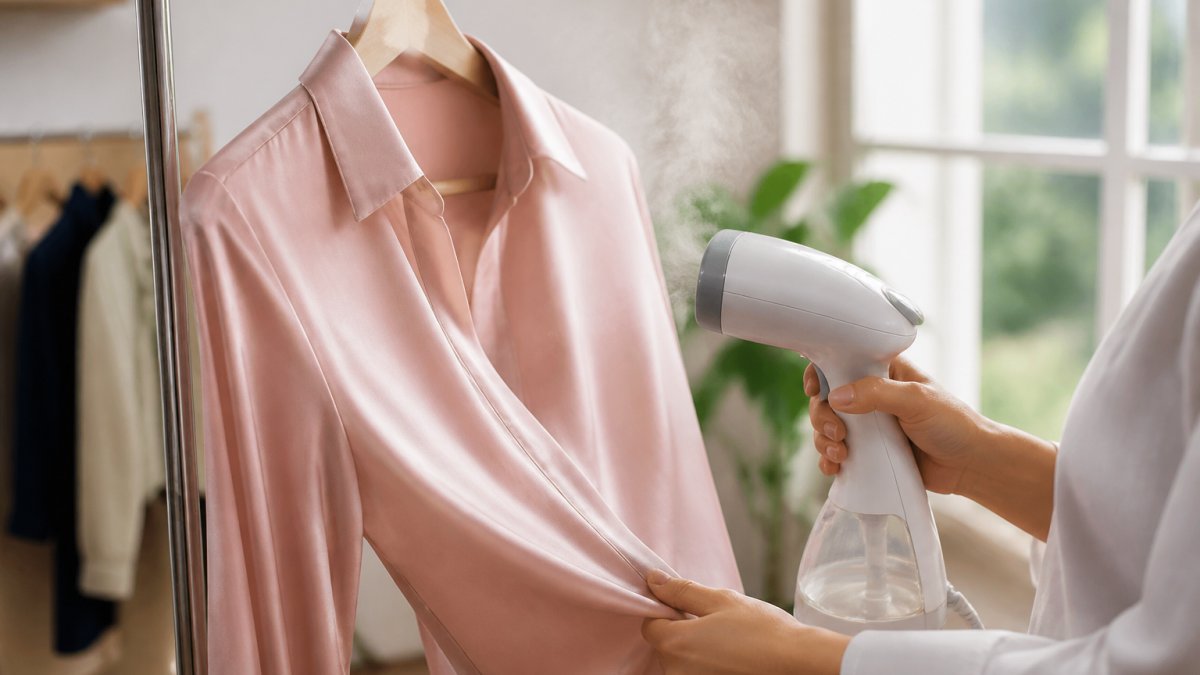
Before steaming your entire silk garment, test a hidden area like an inside seam or hem.
Silk scarves and ties are often folded or rolled, unfold them completely before steaming, since steam can set creases permanently.
After steaming silk, let the garment air dry completely before wearing or storing, damp silk stretches and wrinkles easily.
Finding the Best Steamer for Delicate Clothes
When you're ready to invest in a portable electric steam iron, look for specific features that protect delicate fabrics.
The best portable electric steam iron for delicates has:
- Two temperature settings (low and high)
- A water tank of at least 50 milliliters for continuous steam
- A Teflon-coated soleplate that glides smoothly without sticking
- Lightweight, foldable design for easy storage and travel
Mini Portable Electric Steam Iron(page:1) checks all these boxes.
The Teflon-coated aluminum soleplate glides across delicate fabrics without snagging or sticking, preventing the damage rough surfaces cause.
Universal 100-240 volt compatibility means you can use this portable electric steam iron for delicates anywhere in the world, home, office, or travel.
Portable Electric Steam Irons for Travel and Quick Touch-Ups
Travel and delicate clothes often go together, and a portable electric steam iron beats packing a full-size steamer or iron, but the trade-offs are real, and knowing them helps you pack and use the tool well.
The Measurable Trade-Offs
Portability is a set of compromises, not a free lunch. When you compare a portable electric steam iron to a full-size iron or a handheld garment steamer, look at these numbers on the spec sheet:
- Weight. Portable units are typically a fraction of a full-size iron's weight, which is the main reason they pack well. The lighter the unit, the less heat mass it has, so expect slightly slower wrinkle removal on heavy fabrics.
- Warm-up time. Small heating elements come up to temperature quickly, often in a minute or two, which is why they suit quick touch-ups. Full-size irons take longer but hold heat more steadily.
- Tank capacity and runtime. A small tank (around 50 milliliters is common) gives continuous steam for a short session, not a full wardrobe. Plan to refill between garments or between trips.
- Steam output. Compact units produce less continuous steam than full-size models, so they excel at light wrinkles and touch-ups rather than deep creasing on heavy linen.
- Crease performance. The heated soleplate gives portable steam irons an edge over steamers for sharp creases in structured delicates, but they still cannot match a full-size iron on heavy, stubborn wrinkles.
Voltage, Plugs, and Hotel Realities
If you travel, check the voltage range on the unit. A 100-240 volt model with the right plug adapter covers most destinations, but a single-voltage unit may need a converter, and converters can be bulky and unreliable for heating appliances. Also check the hotel's rules: some properties restrict or prohibit personal irons in rooms, and steam can set off sensitive smoke detectors if used near them.
Quick Touch-Ups That Actually Work
Quick touch-ups are where portable steam irons shine, but technique matters:
- A wrinkled silk blouse needs only a few short passes, hang it, steam from a short distance, and let it air dry before wearing.
- Linen pants wrinkled from packing come back quickly with a second pass rather than hard pressing.
- You don't need an ironing board for hanging touch-ups, a real advantage in a hotel room or small apartment.
Freshening Between Wears, With Caveats
Steam can help relax fibers and reduce light odors between washes, which protects delicate items from excessive laundering. Be careful with hygiene claims, though: steam may reduce some surface odors and microbes under the right conditions, but it is not a guaranteed sanitizer, and it does not replace washing when a garment is soiled. Treat freshening as a way to extend wear between washes, not as a cleaning substitute.
Packing and Storage
Empty and dry the tank before packing, let the unit cool completely, and store it in a pouch so the soleplate doesn't scratch other items. Keep the cord untangled and check the plug adapter before each trip.
For busy professionals and frequent travelers, a portable steam iron is a practical investment when its limits are understood. It takes the stress out of keeping delicate clothes looking polished while away from home, as long as you pack for its tank size, warm-up speed, and voltage needs.
Frequently Asked Questions
Is a portable steam iron safe for delicate fabrics?
Yes, a portable electric steam iron is safe for delicate fabrics when used correctly. The key is using the lower temperature setting and maintaining proper distance from the fabric. Models like the Mini Portable Electric Steam Iron feature two temperature settings specifically designed to accommodate various fabrics safely, including silk, chiffon, and linen. Always test on a hidden area first and follow the garment's care label instructions.
Can you use a steam iron on silk?
You can steam silk clothing safely by using the lowest temperature setting and holding the iron 1-2 inches above the fabric rather than pressing directly. Silk fibers relax with gentle steam penetration, making wrinkles disappear without the risk of scorching or creating shine marks that direct contact can cause. Never use high heat on silk, and consider using a pressing cloth as an extra protective barrier.
What's the difference between a steam iron and a clothes steamer?
A portable electric steam iron combines heat and steam with a flat soleplate, making it ideal for sharp creases and structured garments while also handling delicate fabrics on lower settings. A clothes steamer uses steam only without direct heat contact, making it gentler for hanging clothes and travel. Steam irons offer more versatility for everyday use and stubborn wrinkles, while steamers excel at quick touch-ups and delicate items.
How do you use a portable steam iron without damaging clothes?
Start by checking your garment's care label and selecting the appropriate temperature setting. For delicates, use the lower heat setting and hold the iron slightly above the fabric to let steam do the work rather than pressing directly. Keep the iron moving in smooth strokes, avoid lingering in one spot, and maintain consistent distance. The built-in 50ML water tank in portable models like MixVanta's option ensures steady steam flow for even, safe wrinkle removal.


