


Table of Contents
- Common Red Flags in Electronics Product Listings
- Signs of Counterfeit Electronics
- How to Check Online Seller Reviews
- Electronics Warranty and Return Policy Red Flags
- Electronics Buying Checklist
- What to Do When You Spot a Suspicious Listing
- Conclusion
- Frequently Asked Questions
Last Updated: October 10, 2026
Common Red Flags in Electronics Product Listings
When shopping for electronics online, spotting red flags electronics listings early can save you from counterfeit products, poor quality items, and frustrating returns. At MixVanta, we help shoppers navigate online marketplaces safely by identifying what separates legitimate listings from suspicious ones. Red flags in electronics listings range from unusually low prices to vague product descriptions and missing warranty information, and knowing what to look for protects your wallet and your time.
The real challenge is finding reliable electronics at fair prices. Counterfeit devices, refurbished items sold as new, and products with hidden defects flood online marketplaces daily, and most buyers don't recognize warning signs until after purchase.
Below, we'll walk you through the most common red flags that signal a risky listing, how to verify seller credibility, and what steps to take when something doesn't add up.
Signs of Counterfeit Electronics
Counterfeit electronics are engineered to look legitimate, professional packaging, matching model numbers, but cheap internals. Spotting them requires attention to detail most casual shoppers skip.
Check the product photos carefully. Legitimate sellers use consistent, high-quality images. Counterfeit listings often pull photos from manufacturer websites then ship something different. Look for blurry images, stock photos that don't match the product, or inconsistent lighting and angles.
Verify the model number and serial number. Counterfeiters use real model numbers but pair them with fake components. Search the exact model number on the manufacturer's official website and confirm the description and specifications match. Mismatches are red flags.
Examine the packaging details. Real electronics come in branded packaging with specific fonts, colors, and logos. Counterfeit packaging often has spelling errors, misaligned logos, or off-color printing. If the product photos show packaging that looks slightly "off," request additional photos from the seller before purchasing.
How to Check Online Seller Reviews
Seller reputation is the strongest indicator of listing legitimacy. Sellers with thousands of positive reviews and years of history are far less likely to ship counterfeits or gray-market goods than new accounts with rushed five-star reviews.
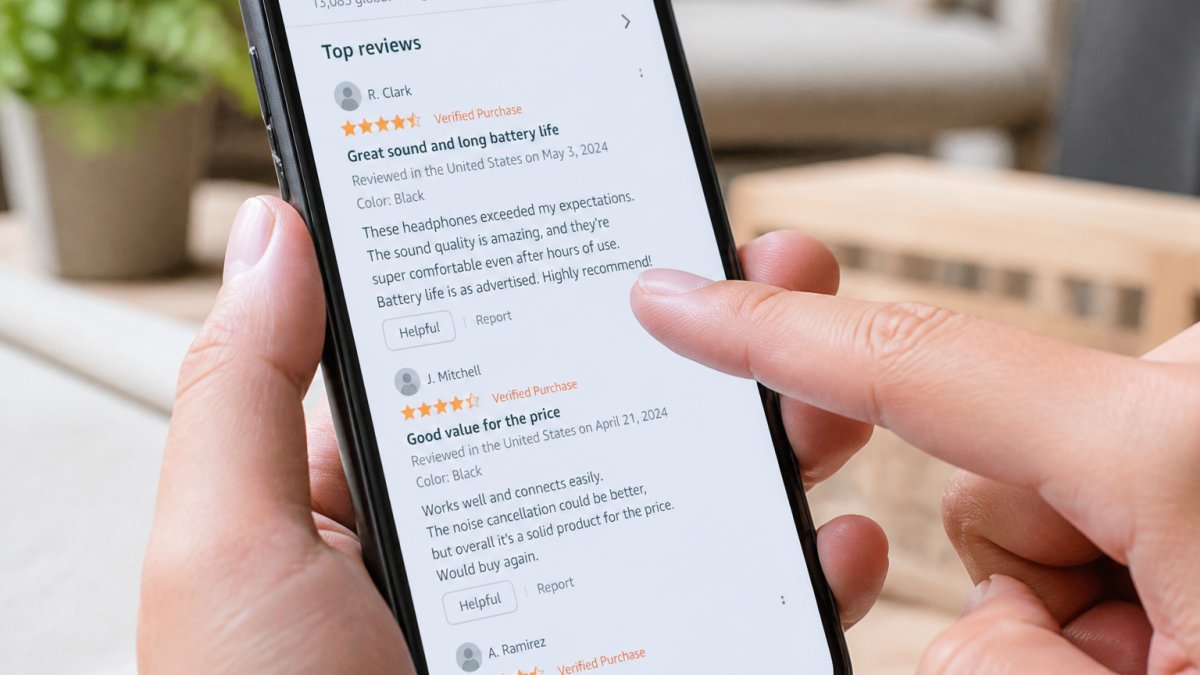
Look for electronics-specific review language. Legitimate reviews mention concrete details: "sealed manufacturer packaging," "battery health 100%," or "model number matches box." Suspicious reviews use generic praise or mention features that don't match the listed model. Multiple reviews referencing different variants suggest mixed inventory.
Check the seller's fulfillment method and origin. Does the seller ship directly or use a fulfillment center? Electronics from unauthorized distributors or gray-market channels often arrive with regional restrictions, missing U.S. warranty coverage, or different power specs. Watch for mentions of "international version," "region-locked," or "no U.S. warranty."
Examine review timing and rating consistency. Authentic profiles show stable ratings over time. Sudden spikes in five-star reviews after price drops or jumps in volume after inactivity suggest manipulation. Reviews clustering around specific dates can indicate batches of refurbished or open-box items.
Verify the seller's authorized-dealer status.
Read negative reviews for category-specific complaints. One-star reviews reveal patterns: chargers with overheating complaints, storage devices with capacity mismatches, batteries with swelling or rapid drain. Multiple reports of the same defect signal fraud.
Watch for review changes tied to product restocking. If reviews suddenly drop or change character after a few weeks, the seller may have received a different batch from a different supplier. Compare review dates across listings for the same product.
Electronics Warranty and Return Policy Red Flags
A solid warranty and return policy is your safety net. Legitimate electronics sellers offer clear terms.
Examine warranty details and source. Legitimate warranties detail coverage for manufacturing defects, accidental damage, and hardware failure. Vague warranties saying "limited warranty included" without specifics are red flags. Manufacturer warranties carry more weight than seller-only warranties.
Verify the return window and restocking terms. Reputable sellers offer at least 30 days for returns. Windows shorter than 14 days or no returns at all are suspicious. For electronics, check whether the seller accepts returns on opened or used items.
Watch for undisclosed refurbished or open-box status. This is one of the most common deceptions in electronics listings. A product listed as "new" but described as "refurbished by manufacturer" or "open-box" in the fine print is being misrepresented.
Check for restocking fees and their size. Sellers who don't list fees upfront are deceptive. Legitimate sellers waive restocking fees for defective items. Charging restocking fees for defective returns is a major red flag.
Identify gray-market and regional-restriction warnings. Look for "International Version," "Region Locked," "Not for U.S. Sale," or "Warranty Valid Only in [Country]." These items may not work with U.S. power standards or lack U.S. certifications. If the listing doesn't state "U.S.
Verify battery and consumable coverage. For devices with batteries, check whether degradation is covered. If the listing doesn't mention battery coverage or reviews mention low health, the item may be refurbished.
Check the return shipping and inspection process. Some sellers require original packaging and all accessories, even if damaged. Others charge inspection fees. Overly complicated processes or hidden fees deter returns, a sign the seller expects defects.
Electronics Buying Checklist
Use this checklist before clicking "buy" on any electronics listing:
| Red Flag Category | What to Check | What to Watch For |
|---|---|---|
| Pricing | Compare to manufacturer MSRP | Price 50%+ below market rate |
| Product Photos | Check consistency and detail | Blurry, stock, or mismatched images |
| Model Number | Verify on manufacturer site | Number doesn't match specs shown |
| Seller History | Review account age and ratings | New account or sudden review spike |
| Product Description | Read for specifics and accuracy | Vague language or missing specs |
| Warranty | Confirm coverage and duration | No warranty or unclear terms |
| Return Policy | Check window and conditions | No returns or excessive restocking fees |
| Buyer Reviews | Look for specific feedback | Generic praise or all 5-star reviews |
| Packaging | Examine photos for authenticity | Misspellings, misaligned logos, poor print quality |
| Seller Response | Check how they handle complaints | Ignored negative reviews or defensive replies |
Before purchasing, ask yourself: Does this listing answer all my questions about the product? Can I find the same item cheaper elsewhere, and if so, why? Does the seller have a track record of satisfied customers? If you can't answer yes to these questions, move on.
What to Do When You Spot a Suspicious Listing
Contact the seller directly. Ask specific questions: "Is this product new or refurbished?" "Does it come with the manufacturer's warranty?" "Can you provide the serial number before shipping?" Legitimate sellers answer promptly and thoroughly. Sellers who avoid detailed questions or give vague responses are likely hiding something.
Request additional photos. Ask for pictures of the actual product you'll receive, not just stock photos. Request photos of the packaging, the serial number, and the product from multiple angles. Legitimate sellers are happy to provide these. Sellers who refuse or claim they can't are red flags.
Check the marketplace's buyer protection. Most reputable online marketplaces, including MixVanta, offer purchase protection that covers counterfeit items and non-delivery. Understand your recourse before buying. If a seller operates outside these protections, that's a warning sign.
Report suspicious listings. If you spot a listing with obvious signs of counterfeiting or fraud, report it to the marketplace. Provide specific details: mismatched model numbers, suspicious reviews, or pricing that's impossibly low. Marketplaces rely on buyer reports to remove fraudulent sellers.
Walk away if something feels off. Your instinct matters. If a deal seems too good to be true, the photos look off, the seller won't answer questions, or the reviews seem fake, don't buy. There are thousands of legitimate listings for the same product. Patience saves money and frustration.
Conclusion
Understanding red flags electronics listings helps you distinguish genuine warnings from false alarms. A low price combined with a suspicious seller history and vague product details is a red flag. A low price from a seller with years of positive reviews and detailed product information might just be a genuine deal.
The key is learning to read the signals. Check seller history. Verify product specifications against the manufacturer's official information. Read reviews for specifics, not just star counts. Confirm warranty and return policies are clearly stated. Ask questions before buying. Report suspicious listings.
When you shop on MixVanta, our diverse electronics catalog includes wireless chargers like the CW6 Wireless Charger for iPhone and Samsung at $20.99, projectors like the HY300 Pro Projector Home Theater at $126.72, and smart home devices like the Mobile Phone Infrared Remote Control at $17.99, all backed by our 30-day money-back guarantee and free shipping over $70. Shop with confidence knowing that your purchase is protected and verified by a marketplace committed to quality and buyer safety.


Frequently Asked Questions
What are the most common red flags in electronics product listings?
The most common red flags include unusually low prices compared to market rates, vague or incomplete product specifications, poor-quality or missing product photos, inconsistent model numbers or descriptions, suspiciously high ratings with minimal reviews, and sellers with no contact information or business address. Watch for listings that lack warranty details or use high-pressure language like 'limited stock' or 'act now.' Missing technical specs, loose connections visible in photos, or damaged packaging are also warning signs that the product may be counterfeit or refurbished without disclosure.
How can you tell if an electronics listing is misleading?
Misleading electronics listings often show stock photos instead of actual product images, display specifications that don't match the product title, or omit critical details like battery life, connectivity options, or included accessories. Compare the listing description across multiple platforms, if details change or contradict each other, that's a red flag. Check if the seller claims new condition but shows signs of physical damage, wear, or loose components in photos. Listings that hide the seller's location, don't specify the origin country, or avoid mentioning refurbished status are also deceptive.
How do you spot fake reviews on electronics listings?
Fake reviews often use generic language like 'great product' or 'highly recommend' without specific details about features or performance. Look for patterns: multiple reviews posted on the same day, reviews from accounts with no purchase history, or suspiciously perfect 5-star ratings with no constructive criticism. Legitimate reviewers mention specific use cases, occasional drawbacks, or comparisons to similar products. If a listing has hundreds of reviews but very few mention actual performance, battery life, or durability, the reviews may be fabricated. Check seller reputation across independent platforms as well.
What should you check about an electronics product's warranty and return policy?
Always verify the warranty length, coverage scope, and whether it covers accidental damage or only manufacturing defects. Legitimate sellers clearly state return windows, restocking fees, and who pays for return shipping. Be cautious of listings with no warranty, lifetime warranties that sound too good to be true, or return policies that require returning the product within 7 days. Check if the seller honors the manufacturer's warranty or offers their own. Avoid sellers who require you to contact them directly for returns instead of offering a transparent process through the platform.
How can you verify a seller's credibility before buying electronics?
Check the seller's overall rating, total number of reviews, and how long they've been selling on the platform. Read recent reviews specifically for electronics purchases and look for mentions of shipping delays, damaged goods, or poor customer service. Verify the seller has a complete business profile with contact information, business address, and response time to customer inquiries. Sellers with established track records, verified contact details, and transparent return policies are more trustworthy. Avoid new sellers with no history or those who've received multiple complaints about counterfeit products or misrepresentation.


