


Table of Contents
- Why Eco Friendly Cleaning Products Matter for Pet Owners
- Ingredients to Avoid in Household Cleaners
- Pet Safe Floor Cleaner Options
- Natural Pet Stain Remover Solutions
- Best Practices for Pet Safe Cleaning
- How to Identify Non-Toxic and Certified Products
- Air Quality and Post-Cleaning Residue Safety
- Frequently Asked Questions
Last Updated: September 27, 2026
Why Eco Friendly Cleaning Products Matter for Pet Owners
Pet owners face a genuine tension: keep your home clean or keep your pets safe. Traditional household cleaners work, but many contain ingredients that pose real risks to animals living in the space. Your dog walks across a freshly cleaned floor and licks their paws. Your cat rubs against baseboards you just wiped down. Pets breathe air treated with chemical sprays designed for human homes, not animal lungs.
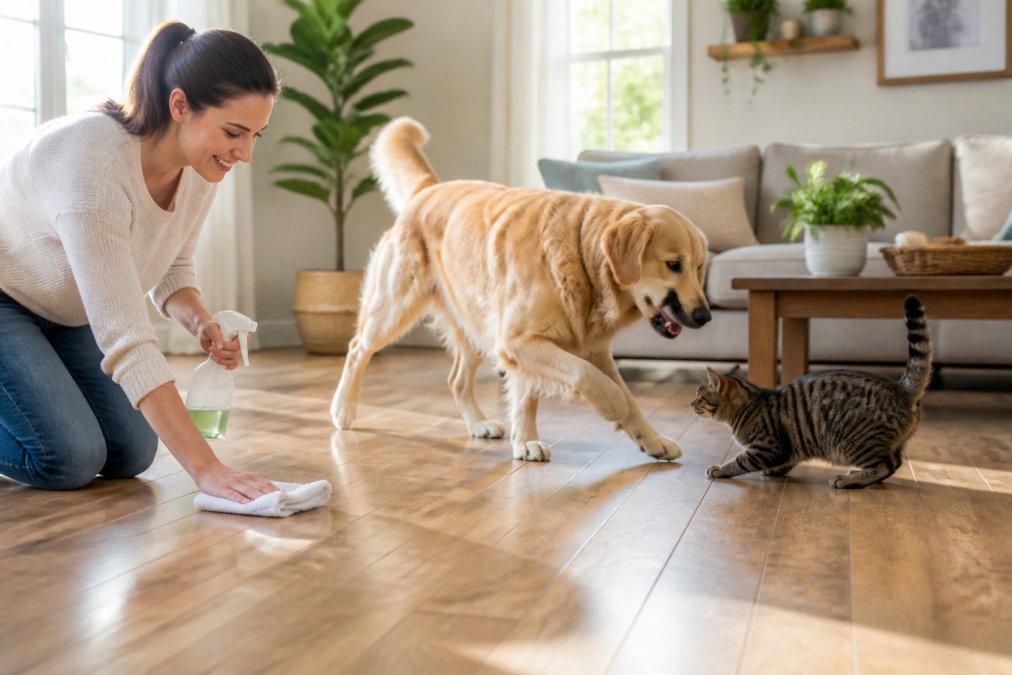
This is where eco friendly cleaning products for pet owners solve a real problem. These products work without ammonia, bleach, phthalates, or volatile organic compounds that irritate respiratory systems and cause dermal irritation. They're formulated to clean effectively while leaving no toxic residue on surfaces your pets touch daily.
The shift toward eco friendly cleaning products for pet owners isn't just about comfort, it's about preventing poisoning incidents. A dog ingesting bleach residue from a kitchen floor. A cat experiencing respiratory distress from ammonia fumes in a closed bathroom. These aren't rare scenarios. Pet owners who switch to eco friendly cleaning products report fewer health incidents and greater peace of mind.
Ingredients to Avoid in Household Cleaners
Standard household cleaners rely on ingredients that work against animal safety. Knowing what to avoid is the first step toward protecting your pets.
Ammonia appears in glass and window cleaners. It's harsh on respiratory systems, pets exposed to ammonia fumes develop coughing, wheezing, and nasal irritation. Cats are particularly sensitive because they groom themselves and ingest residue left on surfaces.
Bleach and chlorine-based compounds strip bacteria and stains but leave behind chemical residue. Even diluted solutions pose a risk. A dog licking a bleach-treated floor can experience burns in the mouth and throat, vomiting, and internal bleeding.
Phthalates hide in scented products, air fresheners, scented sprays, and fragranced cleaning solutions. These chemicals disrupt endocrine function and accumulate in fatty tissues. Pets breathing air treated with phthalate-laden products absorb these compounds over time.
Volatile organic compounds (VOCs) are present in most conventional cleaners. They off-gas into the air, especially in poorly ventilated spaces. Pets inhale these compounds continuously, leading to respiratory issues, eye irritation, and neurological effects with chronic exposure.
Phenols and cresols appear in some disinfectants and antibacterial products. Cats lack liver enzymes to metabolize these compounds, making them especially vulnerable to poisoning. Even small exposures can cause tremors, weakness, and organ damage.
The safest approach: read ingredient labels carefully. If you can't pronounce an ingredient or don't know what it does, assume it carries risk. Eco friendly cleaning products for pet owners replace these hazards with plant-based surfactants, essential oils used safely, and enzymatic cleaners that break down dirt without chemical toxicity.
Pet Safe Floor Cleaner Options
Floors are the primary exposure point for pets. Your dog spends hours a day on floors, licking paws after playing. Your cat walks across floors and grooms their paws constantly. A pet safe floor cleaner must work without leaving residue that causes problems when ingested.
Plant-based cleaners use natural surfactants derived from coconut oil, corn, or other renewable sources. These break down dirt and oils without ammonia or chlorine. They're biodegradable, meaning they don't accumulate in the environment or in your pet's body over repeated exposure.
Enzymatic cleaners are particularly effective for pet accidents. Enzymes break down the proteins and bacteria in urine, feces, and vomit at a molecular level, not just masking the smell. This approach eliminates the odor source rather than layering scent on top, which is why enzymatic cleaners work so well for accident-prone homes.
Vinegar and water solutions have been used safely for decades. White vinegar cuts through grease and disinfects without leaving toxic residue. The smell fades quickly, and there's no concern about ingestion. Mix equal parts white vinegar and water for floors, or use straight vinegar for stubborn spots.
Baking soda absorbs odors and lifts stains without chemical action. Sprinkle it on carpets, let it sit, then vacuum. For hard floors, make a paste with water and scrub gently. It's completely safe if your pet ingests small amounts.
MixVanta carries eco-friendly household supplies designed with pet safety in mind. The Household Anion Air Purifier at $20.99 complements safe floor cleaning by reducing airborne particles and odors using negative ion technology, no chemical sprays needed. It's particularly useful after cleaning to freshen the air without adding new toxins.
Natural Pet Stain Remover Solutions
Pet accidents happen. The goal is removing the stain and odor completely so your pet doesn't re-mark the same spot.
Enzymatic pet stain removers are the gold standard. They contain live enzymes that digest the organic matter in pet urine and feces. Unlike oxygen-based cleaners that bleach stains, enzymatic removers eliminate the source. This prevents pets from returning to the same spot, they can no longer smell their own scent marking.
Household Anion Air Purifier →
Hydrogen peroxide and baking soda paste works well for fresh stains. Hydrogen peroxide is a mild oxidizer that breaks down organic material. Mix it with baking soda to create a paste, apply to the stain, and let it sit for 10-15 minutes before blotting. This combination is safe for pets and effective on most surfaces.
White vinegar for odor neutralization should follow enzymatic treatment. After the enzyme has broken down the stain, vinegar neutralizes any remaining odor molecules. It's particularly useful on carpets where urine soaks deep into fibers.
Salt and lemon juice offers a natural alternative for fresh stains. Salt draws moisture from the stain while lemon juice's acidity breaks down organic compounds. Sprinkle salt on the wet area, let it absorb the moisture, then spray lemon juice and blot. It's safe, effective, and uses ingredients you likely have at home.
The key difference between pet stain removers and general cleaners is specificity. Pet stains require breaking down proteins and bacteria in urine, not just removing visible dirt. Generic floor cleaners won't fully eliminate the scent, so your pet will continue marking that spot.
Best Practices for Pet Safe Cleaning
How you clean matters as much as what you use. Even the safest eco friendly cleaning products for pet owners can cause problems if used incorrectly.
Ventilate thoroughly during and after cleaning. Open windows and doors to allow air circulation. This prevents any residual fumes or particles from accumulating in enclosed spaces where pets breathe continuously. Pets with respiratory sensitivity benefit most from this practice.
Keep pets out of cleaned areas while they're wet. Even plant-based cleaners can irritate paws and skin if your pet walks through a freshly cleaned floor before it dries. Give treated surfaces at least 30 minutes to dry completely before allowing pets back into the space.
Avoid scented products entirely. Even "natural" essential oil scents can be problematic. Some essential oils, tea tree, eucalyptus, lavender, are toxic to pets at concentrated levels. Unscented eco friendly cleaning products for pet owners eliminate this risk entirely.
Test new cleaners on a small, inconspicuous area first. Some pets have sensitivities to specific plant-based ingredients. Testing prevents an allergic reaction or skin irritation from spreading across your entire home.
Store all cleaning products out of reach. Pets are curious. Even products labeled safe should be stored in cabinets or high shelves where dogs and cats can't access them. Accidental ingestion of even safe products in large quantities can cause stomach upset.
Use microfiber cloths and mops. They clean effectively with just water or minimal cleaner, reducing the amount of chemical residue left behind. This is a simple way to cut down on exposure even when using eco friendly products.
A comparison of cleaning approaches shows why method matters:
| Approach | Safety for Pets | Effectiveness | Residue Risk | Cost |
|---|---|---|---|---|
| Conventional cleaners | High risk | Very high | High | Low |
| Eco friendly products with poor ventilation | Medium risk | Medium | Medium | Medium |
| Eco friendly products with proper ventilation | Low risk | High | Very low | Medium |
| Natural DIY solutions | Very low risk | Medium | Very low | Very low |
How to Identify Non-Toxic and Certified Products
Marketing claims are everywhere. "Natural," "eco-friendly," and "pet-safe" don't have legal definitions, any company can use them. Identifying genuinely safe products requires looking beyond the label.
Third-party certifications carry real weight. Look for labels from organizations that test products independently. The Safer Choice label from the EPA indicates products have been vetted for human and environmental safety.
Air Quality and Post-Cleaning Residue Safety
The air your pet breathes matters as much as the surfaces they touch. Cleaning products release particles and chemical compounds into the air, where pets inhale them continuously.
Frequently Asked Questions
What ingredients should I avoid in cleaning products if I have pets?
Avoid ammonia, bleach, phenol, phthalates, and essential oils like tea tree and eucalyptus, which are toxic to dogs and cats. Check labels for volatile organic compounds (VOCs) and always verify ingredient lists before using any cleaner around pets. Many commercial cleaners contain respiratory irritants that harm both animals and humans.
How can I verify if a cleaning product is truly pet-safe?
Look for third-party certifications from organizations that verify non-toxic formulas. Read full ingredient lists rather than relying on marketing claims alone. Pet-safe products should be biodegradable, ammonia-free, and bleach-free. Contact manufacturers directly if ingredient information is unclear, and test any new product in a small area before full use.
What are the best natural pet stain remover options?
Enzymatic cleaners break down organic matter in pet accidents without harsh chemicals. Vinegar and baking soda combinations work for many stains and are safe for pets. For tougher stains, plant-based enzymatic formulas target the source of odors without leaving toxic residue. Always blot first, apply the cleaner, and allow proper drying time before allowing pets back in the area.
Are essential oils safe to use in cleaning products for pet owners?
Many essential oils are toxic to dogs and cats, including tea tree, eucalyptus, citrus, and peppermint. Even diluted versions in cleaning products can cause respiratory issues or skin irritation. Choose fragrance-free or naturally scented products that use pet-safe alternatives like beeswax or plant extracts instead of concentrated essential oils.


