


Table of Contents
- What Makes a Good Alternative to Temu?
- AliExpress: The Established Global Marketplace
- Wish: Mobile-First Budget Shopping
- Shein: Fast Fashion at Extreme Discounts
- Banggood: Tech-Focused Budget Shopping
- DHgate: B2B Pricing for Individual Buyers
- MixVanta: One-Stop Shopping with Reliable Fulfillment
- Geek: Electronics at Wholesale Prices
- Comparison: Key Factors Across Platforms
- Hidden Costs: What Most Shoppers Miss
- Safe Online Shopping Best Practices
- The Real Trade-Off: Price vs. Reliability
Last Updated: August 16, 2026
Best Affordable Alternatives to Temu
If you've been shopping on Temu, you've likely discovered the appeal: rock-bottom prices on everything from clothing to gadgets to household essentials. But you've also probably experienced the drawbacks, unpredictable shipping times, inconsistent product quality, and the nagging concern about whether you're actually getting what you paid for. The good news is that plenty of best affordable alternatives to Temu exist, and many deliver better value when you factor in reliability, speed, and customer protection.
At MixVanta, we've analyzed the landscape of budget-friendly e-commerce platforms to help you find the right fit for your shopping needs. Whether you're looking for faster shipping, better product quality, stronger consumer protection, or simply a different user experience, there's likely a platform that checks more boxes than Temu does.
Below, we'll walk you through the most compelling best affordable alternatives to Temu, comparing shipping speeds, product reliability, return policies, and hidden costs so you can make an informed decision.
What Makes a Good Alternative to Temu?
Before diving into specific platforms, it helps to understand what separates a genuinely useful shopping platform from one that just looks cheap on the surface. The best alternatives balance three core factors: competitive pricing, reliable product quality, and transparent customer service.

Many shoppers assume that the lowest price always wins. In practice, the real value comes from knowing what you're actually getting. A garment that costs half as much but falls apart after two wears costs more in the long run than one priced slightly higher that lasts. Similarly, free shipping means nothing if your order takes three months to arrive or never shows up at all.
Consumer protection matters more than most people realize. Platforms with clear return policies, buyer protection guarantees, and responsive customer support reduce the financial and emotional risk of buying from unfamiliar sellers. When something goes wrong, and with budget shopping, something eventually does, you want recourse.
Finally, transparency in pricing is essential. Many platforms advertise "free shipping" but inflate product prices to compensate, or hide currency conversion fees until checkout. The best affordable alternatives to Temu show you the final price upfront, in your local currency, with no surprises.
| Factor | Why It Matters | Red Flags |
|---|---|---|
| Product Quality | Durability determines real value | Vague product descriptions, no reviews |
| Shipping Speed | Fast delivery increases satisfaction | "Free shipping" with 4-8 week delivery times |
| Return Policy | Protection against defects and mismatches | No returns, restocking fees, return shipping costs |
| Price Transparency | Avoid hidden fees at checkout | Currency conversion surprises, surprise taxes |
| Customer Support | Resolution when problems occur | No contact info, slow response times, language barriers |
AliExpress: The Established Global Marketplace
AliExpress has been operating since 2010 and remains one of the largest e-commerce platforms for direct-to-consumer goods from manufacturers and wholesalers. If you're comparing AliExpress vs Temu, the key difference is maturity and infrastructure. AliExpress has built-out buyer protection systems, dispute resolution processes, and seller ratings that create accountability.
The platform spans electronics, clothing, home goods, and just about everything else Temu offers. Prices are genuinely competitive, often matching or beating Temu on identical items. The critical advantage is consistency: you know what you're getting because sellers maintain reputations that affect their ability to sell.
Shipping typically takes 2-4 weeks for standard delivery, with faster options available at higher costs. AliExpress uses established logistics partners, so tracking is reliable and orders rarely vanish. The platform's Buyer Protection program gives you 60 days to open a dispute if an item doesn't arrive or doesn't match the listing. You can request a refund or replacement without losing money upfront.
Prices range from under a dollar for small accessories to hundreds for electronics. The platform supports multiple currencies and payment methods, including credit cards, PayPal, and local payment options. Currency conversion happens at checkout, and the final price is displayed before you confirm payment.
One limitation: while AliExpress is more reliable than Temu, shipping is still slower than domestic options like Amazon. If you need something in a week, this isn't the platform. For non-urgent purchases, clothing, gadgets, home decor, AliExpress delivers solid value.
Wish: Mobile-First Budget Shopping
Wish built its reputation on aggressive discounting and a mobile-first experience. The app shows you deals on clothing, accessories, electronics, and home goods, often at prices that seem almost too low to be real. That's because many Wish items are sold at a loss or near-zero margin, the platform makes money through advertising, not markups.
The platform's strength is its user interface. Browsing Wish feels less like shopping and more like discovering deals. The algorithm learns your preferences and serves up personalized recommendations. For casual shoppers who enjoy the hunt, Wish can be entertaining.
The trade-off is predictability. Shipping times vary wildly, sometimes 2 weeks, sometimes 8 weeks, sometimes items never arrive. Product quality is inconsistent. The return process is cumbersome; you often have to dispute through the app rather than initiate a straightforward return. Customer support is limited, and responses can take days.
Wish is best suited for low-stakes purchases: cheap accessories, gadgets under ten dollars, novelty items where you're not devastated if the order never arrives. For anything you actually need, clothing you'll wear regularly, electronics you depend on, the risk-reward doesn't favor Wish.
Shein: Fast Fashion at Extreme Discounts
Shein has exploded in popularity by offering trendy clothing at prices that undercut traditional fast fashion brands like H&M and Forever 21. If you're shopping for clothing specifically, Shein's inventory and speed are hard to beat. New styles appear constantly, and shipping to the US is often 1-2 weeks, significantly faster than Temu or AliExpress.
The platform's supply chain is optimized for speed and volume. Shein manufactures or sources items in bulk and ships directly from warehouses, which explains both the low prices and quick delivery. For seasonal clothing, trends, and fast fashion, Shein works.
The downside is environmental and ethical impact. Shein's business model depends on extremely low labor costs and rapid inventory turnover, which means items are designed to be disposable. Quality is intentionally low, garments often shrink, fade, or fall apart after a few wears. Returns are difficult; the company charges return shipping and restocking fees that can exceed the item's cost.
Additionally, Shein's sizing is notoriously inconsistent. A medium from one listing might be completely different from a medium in another. The platform relies on customer reviews to figure out actual sizing, which means you're essentially crowdsourcing fit information.
Shein makes sense if you're buying trendy pieces you don't expect to keep long-term, or if you're testing a style before investing in a higher-quality version. For staple clothing or anything you want to last, the true cost (factoring in returns and replacements) often exceeds what you'd pay elsewhere.
Banggood: Tech-Focused Budget Shopping
Banggood specializes in electronics, gadgets, and tech accessories. If you're shopping for drone parts, smart home devices, gaming peripherals, or consumer electronics, Banggood often has competitive pricing and a wider selection than general marketplaces.
The platform's strength is its focus. Banggood curates sellers and products specifically for the tech category, which means better quality control than generalist platforms. Sellers are vetted, and the platform maintains stricter standards for electronics than Temu does.
Shipping for electronics is typically 2-3 weeks. The platform offers buyer protection similar to AliExpress, with dispute resolution and refund options. Prices are genuinely low, often 20-40% below retail for the same items.
The limitation: Banggood is useful only if you're shopping for tech and gadgets. For clothing, home goods, or general merchandise, you'll want a different platform. It's a specialized tool, not a one-stop shop.
DHgate: B2B Pricing for Individual Buyers
DHgate connects individual buyers with manufacturers and wholesalers, primarily in China. The platform was originally designed for bulk orders, but individuals can buy single items. The appeal is wholesale pricing, you're buying directly from the source without middleman markups.
Prices on DHgate are often lower than Temu for identical items, because you're literally buying from the same manufacturers that supply other platforms. A phone case that costs 2 dollars on DHgate might be 3 dollars on Temu because Temu has added its own margin.
The trade-off is user experience. DHgate's interface is clunky compared to Temu or AliExpress. Product listings are often poorly photographed and described. Seller ratings exist but are less transparent. Shipping is slow, typically 3-4 weeks, and tracking can be unreliable.
DHgate works if you're willing to do more research and accept slower shipping in exchange for the lowest possible prices. It's not a casual shopping experience; it requires patience and some detective work to find quality sellers.
MixVanta: One-Stop Shopping with Reliable Fulfillment
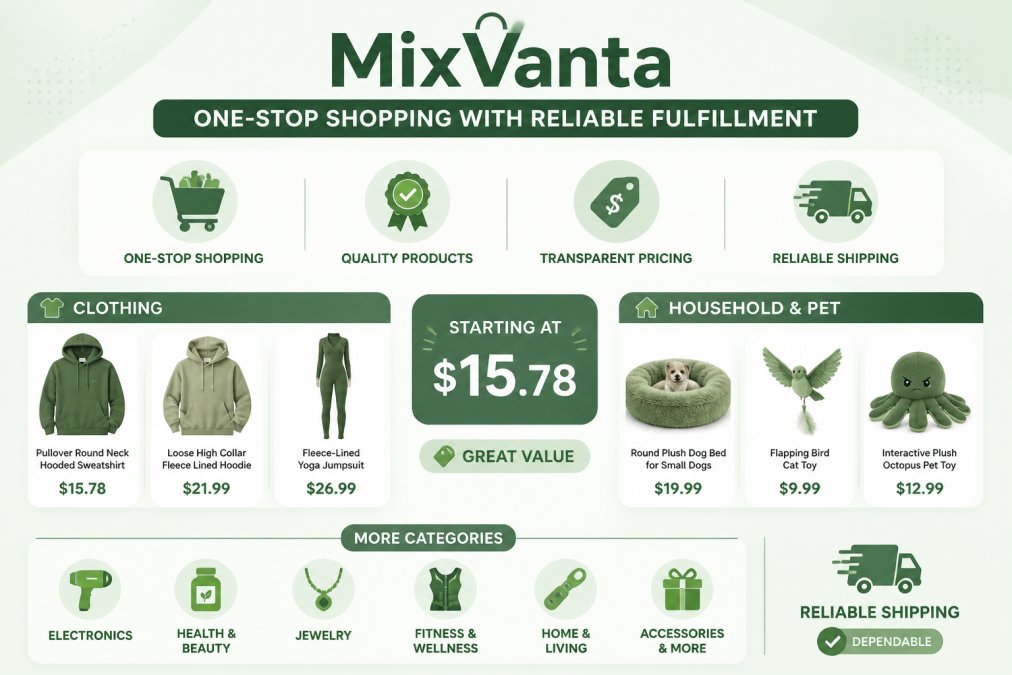
MixVanta offers a different approach to affordable shopping. Instead of competing solely on price, MixVanta focuses on convenient one-stop shopping for household supplies, electronics, clothing, and trending products. The platform emphasizes product quality, transparent pricing, and reliable shipping.
The catalog spans everything from hoodies like the Pullover Round Neck Hooded Sweatshirt starting at $15.78 to practical items like the Portable 3-in-1 Air Cooler Fan at $4.14. The platform supports global currency conversion, so international shoppers see prices in their local currency upfront.


What sets MixVanta apart is the commitment to transparency. Prices are final, no hidden fees at checkout. Free shipping is available on orders over $70, and there's no price inflation to cover it. The 30-day money-back guarantee means you can shop with confidence; if something doesn't meet expectations, you have recourse.
For busy parents, pet owners, and value-conscious shoppers who want reliable products without the uncertainty of marketplace platforms, MixVanta delivers both competitive pricing and peace of mind. You're not gambling on whether your order arrives or whether the product matches the listing.
Geek: Electronics at Wholesale Prices
Geek specializes in consumer electronics and gadgets, similar to Banggood but with a different seller base. The platform connects buyers with electronics manufacturers and resellers. Prices are competitive, particularly for phones, tablets, and computer accessories.
Shipping is typically 2-3 weeks, and the platform offers buyer protection. The main advantage over Banggood is that Geek sometimes has exclusive inventory or different sellers, so you might find better prices on specific items.
The limitation is the same as Banggood: this platform is useful only for electronics. And like other electronics-focused marketplaces, the user experience is functional but not polished.
Comparison: Key Factors Across Platforms
| Platform | Shipping Speed | Price Range | Best For | Return Process | Buyer Protection |
|---|---|---|---|---|---|
| AliExpress | 2-4 weeks | Very low | General merchandise | 60-day dispute window | Strong |
| Wish | 2-8 weeks | Ultra-low | Low-stakes purchases | App-based disputes | Weak |
| Shein | 1-2 weeks | Low | Trendy clothing | Restocking fees apply | Moderate |
| Banggood | 2-3 weeks | Low | Electronics & gadgets | Dispute resolution | Strong |
| DHgate | 3-4 weeks | Ultra-low | Bulk/wholesale items | Manufacturer-dependent | Moderate |
| MixVanta | Fast Handling | Low-moderate | One-stop shopping | 30-day money-back | Strong |
| Geek | 2-3 weeks | Low | Electronics | Dispute resolution | Moderate |
Hidden Costs: What Most Shoppers Miss
The real cost of buying from budget platforms isn't just the item price, it's the total cost including shipping, returns, replacements, and your time. Here's what to watch for:
Currency conversion fees. If you're paying in a currency different from the platform's default, you might be charged conversion fees that aren't obvious at checkout. Some platforms show the final price upfront; others reveal fees only after you've entered payment information. Always check the final total before confirming.
Return shipping costs. Many platforms advertise free returns but require you to pay for return shipping. On a five-dollar item, return shipping can cost more than the original purchase. This effectively means returns are impossible for low-cost items.
Restocking fees. Some platforms charge restocking fees on returns, even if the item arrived damaged or didn't match the listing. A 20% restocking fee on a returned garment might cost you more than keeping the defective item.
Slow shipping as a feature, not a bug. Platforms like Temu and Wish use slow shipping as a way to reduce costs. You're not paying for speed; you're paying for the item to sit in warehouses and transit hubs for weeks. If you need something quickly, these platforms aren't viable, and you'll end up paying more elsewhere.
Product quality surprises. A gadget that looks great in photos might arrive with missing parts, dead batteries, or manufacturing defects. Budget platforms often have lenient return policies for sellers but strict policies for buyers, which means you absorb the cost of defective items.
Safe Online Shopping Best Practices
When buying from any budget marketplace, follow these practices to minimize risk:
Read recent reviews. Don't rely on overall ratings; read the most recent reviews from the last month. Seller quality can change, and old positive reviews don't guarantee current performance.
Check product photos carefully. Look for photos taken by actual customers (usually lower quality, more varied angles) versus professional product photos. Customer photos show real-world quality and how items actually look when they arrive.
Verify seller ratings. On platforms like AliExpress, buy only from sellers with 4.8+ stars and at least 1,000 reviews. Lower-rated sellers might offer slightly cheaper prices, but the risk isn't worth the savings.
Understand the return window. Before buying, check how long you have to open a dispute or return an item. Some platforms give you 30 days; others give you 60. Know the deadline before your item arrives.
Use buyer protection. Always pay with a method that offers buyer protection, credit card, PayPal, or the platform's escrow system. Never use bank transfer or wire payment, as you have no recourse if the seller doesn't ship.
Document everything. Take screenshots of the listing, product photos, and the final price. If you need to open a dispute, you'll have evidence of what you ordered versus what you received.
Test with small orders first. If you're buying from a new seller or platform, start with a low-cost item. This lets you evaluate their shipping speed and product quality before committing to larger purchases.
The Real Trade-Off: Price vs. Reliability
The fundamental choice when selecting a best affordable alternative to Temu is how much convenience and reliability you're willing to trade for lower prices. Temu's appeal is its extreme discounts. The cost is uncertainty: you might wait weeks for an order that never arrives, or receive something that doesn't match the listing.
Platforms like AliExpress and MixVanta charge slightly more but provide structure. Seller ratings, buyer protection, dispute resolution, and transparent pricing reduce risk. You're paying a premium for predictability.
For essential items, clothing you'll wear regularly, electronics you depend on, household goods you need, that premium is worth it. For novelty purchases or items where you can afford to lose money, the ultra-budget platforms make sense.
Most smart shoppers use multiple platforms strategically. AliExpress for general merchandise when you have time to wait. Shein for trendy clothing. Banggood for electronics. MixVanta for one-stop shopping with reliability. Each has a role based on what you're buying and how soon you need it.
The choice between Temu and its alternatives comes down to what you value most: absolute lowest price or reliability, speed, and customer protection. If you're willing to spend slightly more for peace of mind, MixVanta delivers both competitive pricing and the convenience of one-stop shopping with transparent pricing and a 30-day money-back guarantee. Shop Now and experience the difference that reliability makes.
This article was written using GrandRanker


